Built 1977
ACN 00001
Whereabouts unknown
The TR8s with a story of their own: the V8 prototypes of the 1970s, the coupés BL kept for testing, the car *Autocar* drove, the experimental and pilot cars of the British project, Group 44's racers and Ken Slagle's champion, and the last cars built.
A TR8 is notable here when the record follows it: a prototype, a car from BL's own fleet, a racer, or one of the last off the line. The cards below list them, with the year of building where it is known and whether each is known to survive. Many more cars are described as works, press or development TR8s without the documents to show it; triumphtr8.com, which has looked into many of them, explains why such stories need proof.source 1source 2
Four of the TR7 family's prototypes are recorded with V8s: X840, X843, X858 and X859. triumphtr8.com dates the first two registrations, TLB 254M (X840) to August 1973 and UXC 582M (X843) to May 1974, and tells what is known of three of the cars: X840 began on Bosch injection and later took carburettors, X843 was photographed on test in Wales beside X828, a TR7 prototype, and X858 did rough-road testing in 1977. Period photographs show both of the first two with left-hand drive.
The first pre-production TR8, ACN 00001, was built at Speke in 1977, and triumphtr8.com shows a photograph of it without saying where it is now. Among the Speke coupés kept in Britain, ACN 00012, registered SHP 658R, still has its development decals, according to triumphtr8.com, with "Sprint" along the body and "V8" at the back, and appears in Canley's experimental-fleet records marked "Ready for disposal (sale?)" on 6 May 1981. WAC 272S was used for environmental-chamber tests and WAC 275S on a severe high-mileage programme; the TR Drivers Club places both in the Speke batch of 1977, and both were sold at Measham in August 1981.
YDU 617S, the coupé Autocar drove in 1979, was an American-specification engineering car in white, with air conditioning and a cloth sunroof; the road tests have the magazine's verdict, and no source read says where the car is now. One more coupé rests on Mike Cook's word alone, as the TR Drivers Club quotes him: an engineering car, apparently numbered 199999, that was the only coupé sold in America for the 1981 model year. No other source read mentions it.source 3source 1source 4source 5source 2source 6source 7source 8source 9
The right-hand-drive TR8 for Britain began with two experimental cars and a quality-build car. That car, MHP 404V, was the first of the Home Market TR8s, built on 24 April 1980 in Argent Silver with the TR7 Spider's grey-stripe trim; people who were there told triumphtr8.com that it was built for a BL director, who chose the trim. That year it went round Britain on Club Triumph's reliability run with the development car NWK 988W, Solihull's plant director in one of the two crews, and on 4 September 1981 it was auctioned at Measham.
NWK 988W, built on 29 July 1980 in Poseidon Green with an American engine, was the car BL Motorsport at Abingdon worked on late that year to try a different engine and chassis for the British and European market; Richard Hurdwell's memo of 16 December lists the work, and the right-hand-drive page sets it out. Of the standard steering he wrote: "Congratulations to whoever developed this." Canley Classics reports a suggestion that it may be the lot numbered 988 at Measham on 7 August 1981, a car its fleet records do not otherwise show. Classic & Sports Car set it beside a personal-export TR8 in May 2026.
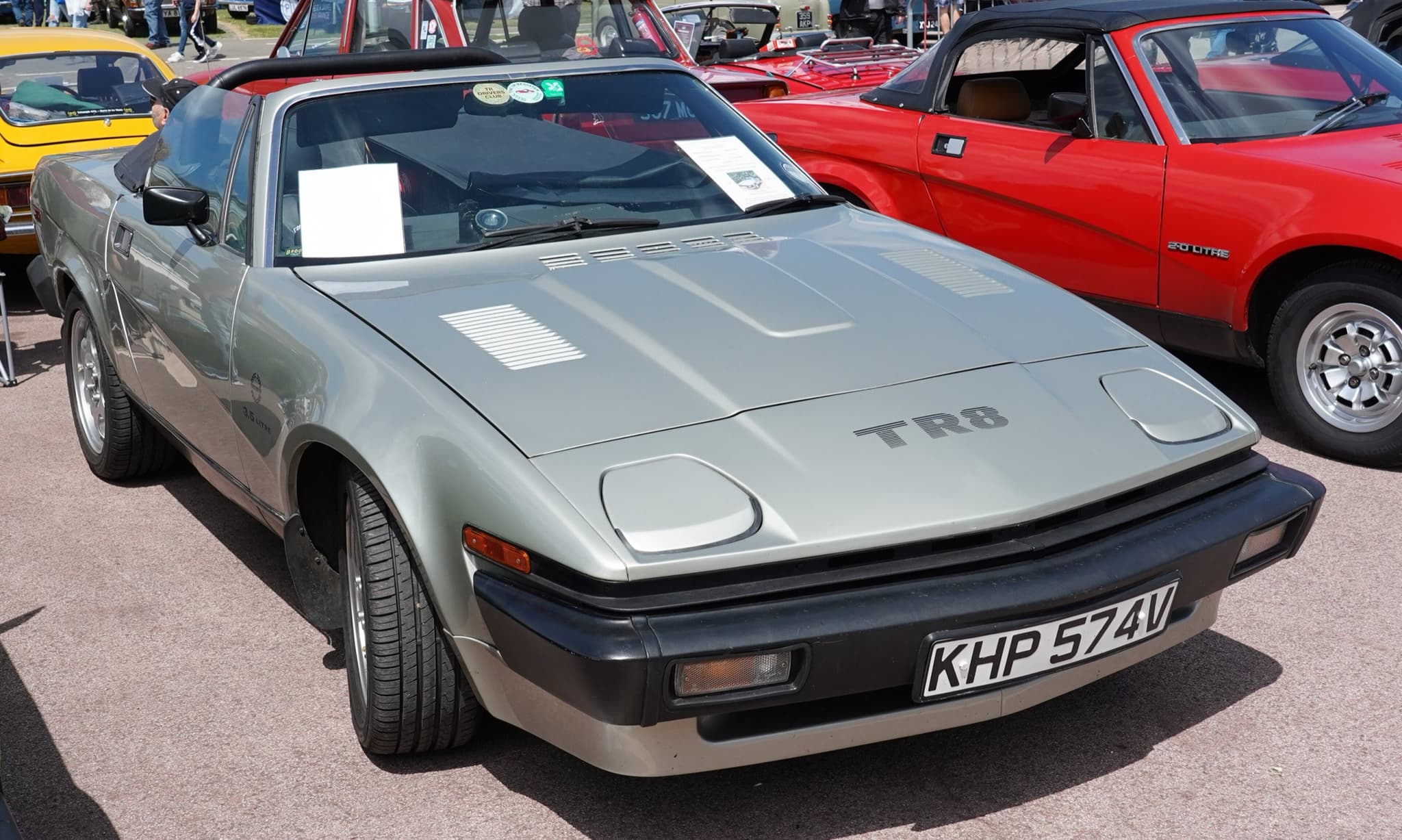
The three experimental cars were EXP 921, KHP 573V, a red automatic used for temperature testing; EXP 923, KHP 574V, a silver manual for general development; and EXP 925, PVC 568W, built in December 1980 for work on the trim and styling of a 1982 look. EXP 921 and EXP 925 were sold at Measham on 28 August 1981. The company held on to EXP 923 until 2003. On 27 August 1981, the day before the other two were sold and with the programme already over, it was timed at MIRA, according to triumphtr8.com, from Roy Ford's account. Two more experimental convertibles went to the same auctions: X919, JVC 824V, an automatic with air conditioning used for "Hot Room Testing", which its disposal record lists as left-hand drive, and X924, KHP 575V, a red car used for emission development.
Two more cars belong to the same story. Heritage counts 402290 as a TR8, though this automatic from the methods build carries a TR7's number and plate; no other genuine right-hand-drive TR8 is known to. EKV 397T, a V8 built into a right-hand-drive TR7 shell and painted in rally colours, went from the experimental fleet to the British School of Motoring (the fleet's record reads "Used by BSM at Brands Hatch") and was sold at Measham on 4 September 1981.source 10source 11source 12source 2source 1source 13
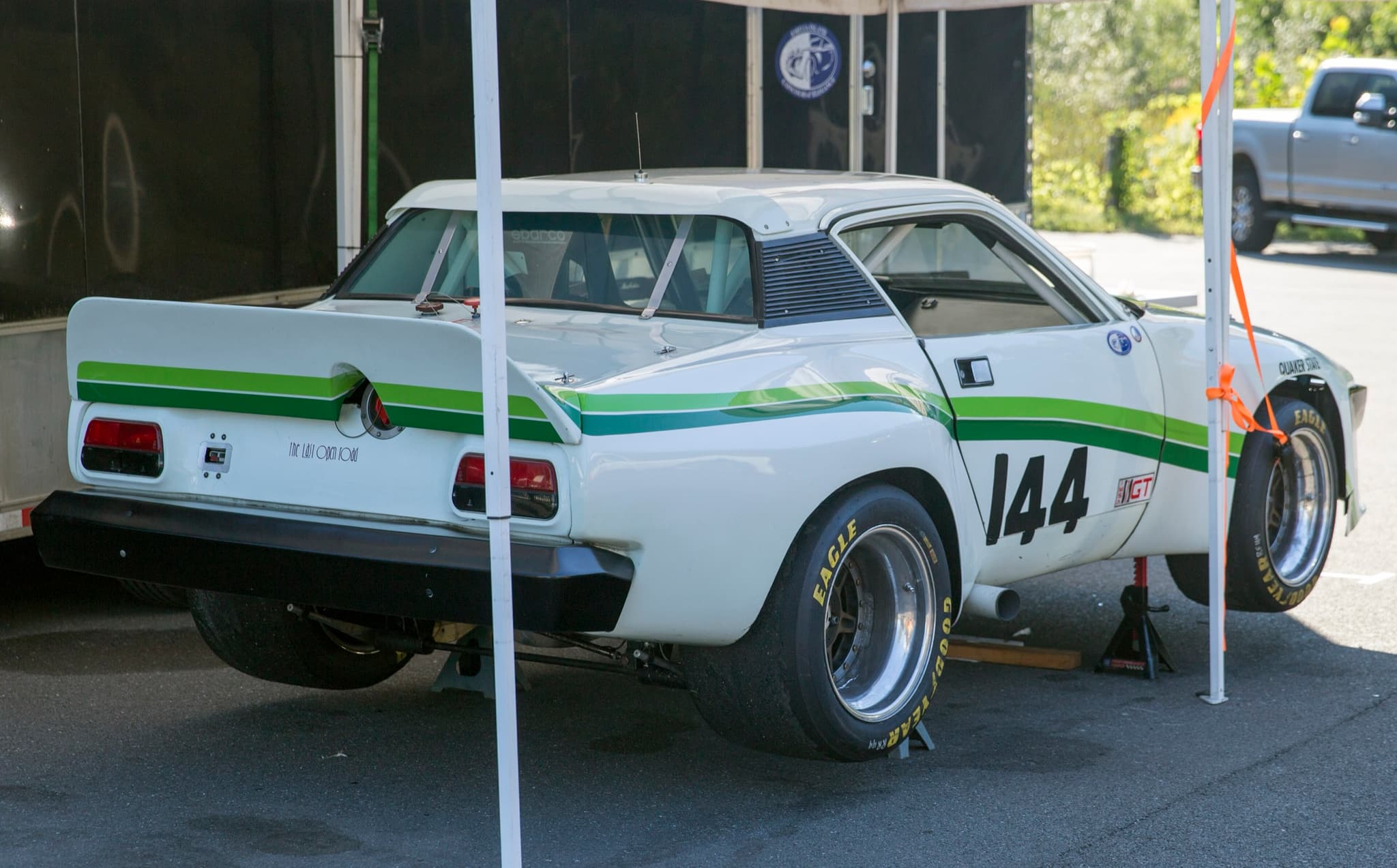
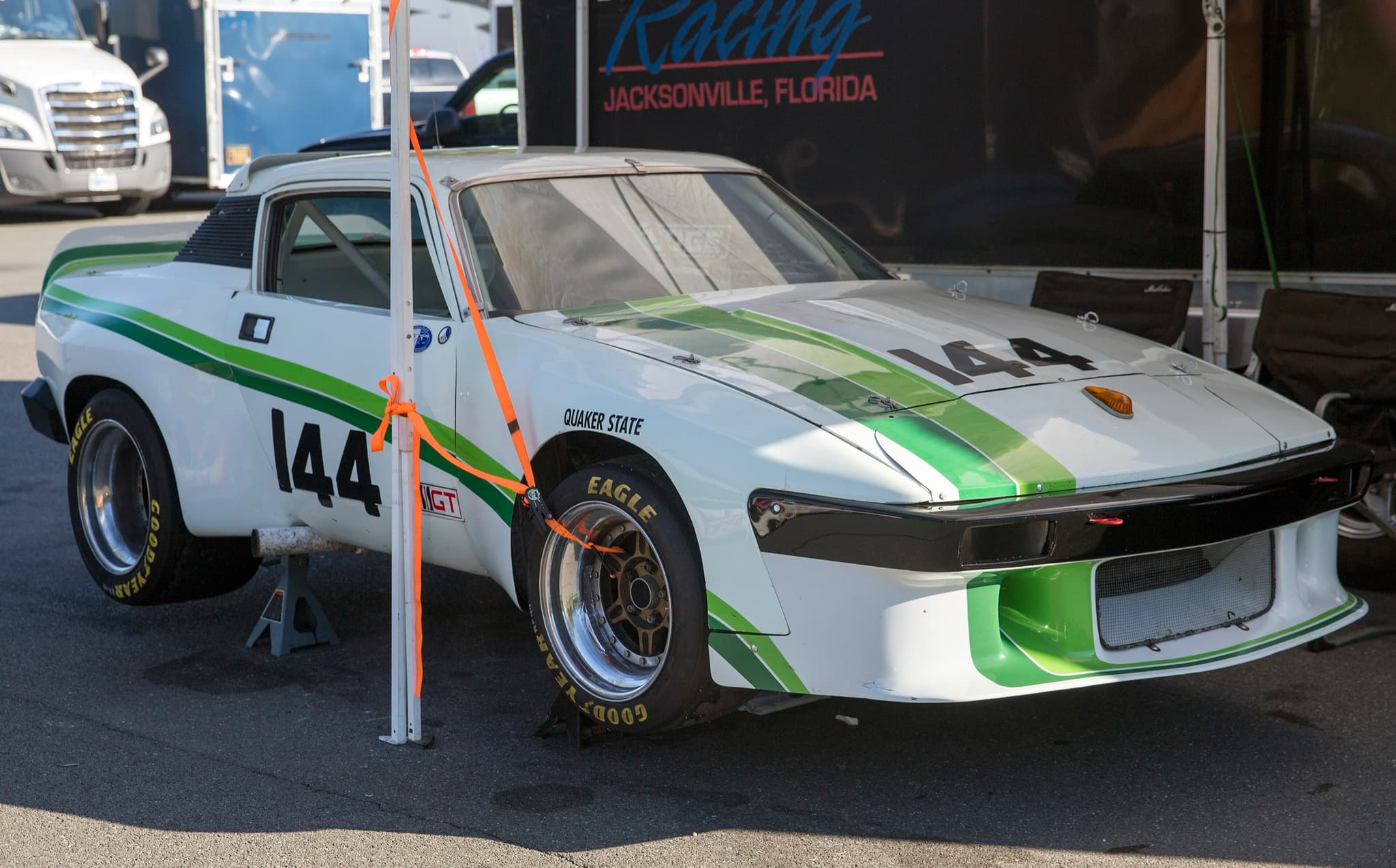
Two TR8s raced for Group 44, Bob Tullius's team and Jaguar Rover Triumph's official one in America: No. 44 from 1979 and No. 4 from 1980, until March 1981. Five of IMSA's GTO class wins of 1980 were theirs. No source read gives their chassis numbers, so which cars survive, and which raced as which number, is not known; the car in this page's pictures is described by its photographer as one of Group 44's. The team's page has their story and every result.
Ken Slagle's TR8, heavily modified by Mike Cook's account, made him the SCCA's national champion in C Production at Road Atlanta in 1981. His team had entered a TR8 for the same title race in 1980, as No. 1, but no source read says whether it was the same car; racing has the rest of the TR8's competition record.source 14source 15
The last TR8 by chassis number, 408533, was built on 12 October 1981; its build record reads 4085(7)3, and triumphtr8.com places it in a private collection in the United States. The last TR8 to be finished, 408405, was completed on 20 October 1981. James TenCate's highest injected engine number, 14E00799, belongs to a Silver Leaf car also built on 12 October; no source read says whether it is 408533. And 408534, the number after it, went to a TR7: a right-hand-drive convertible that BL kept and that is now at the British Motor Museum.source 5source 4source 16source 9
Built 1977
Whereabouts unknown
Whereabouts unknown
Whereabouts unknown
Whereabouts unknown
Whereabouts unknown
Built 1980
Whereabouts unknown
Built 1980
Whereabouts unknown
Built 1980
Whereabouts unknown
Built 1980
Whereabouts unknown
Built 1980
Whereabouts unknown
Built 1980
Whereabouts unknown
Built 1977
Survives
Whereabouts unknown
Whereabouts unknown
Built 1981
Whereabouts unknown
Built 1981
Survives
Whereabouts unknown
Built 1977
Whereabouts unknown
Built 1977
Whereabouts unknown
Whereabouts unknown
Whereabouts unknown
Sources are given as plain text; their addresses are on the sources page.