The People Behind the Triumph TR8

Who designed the TR8 and sold it, who ran the British project and BL Motorsport's work on it, who raced it, who wrote about it, and who has kept its records since: a short entry for each.

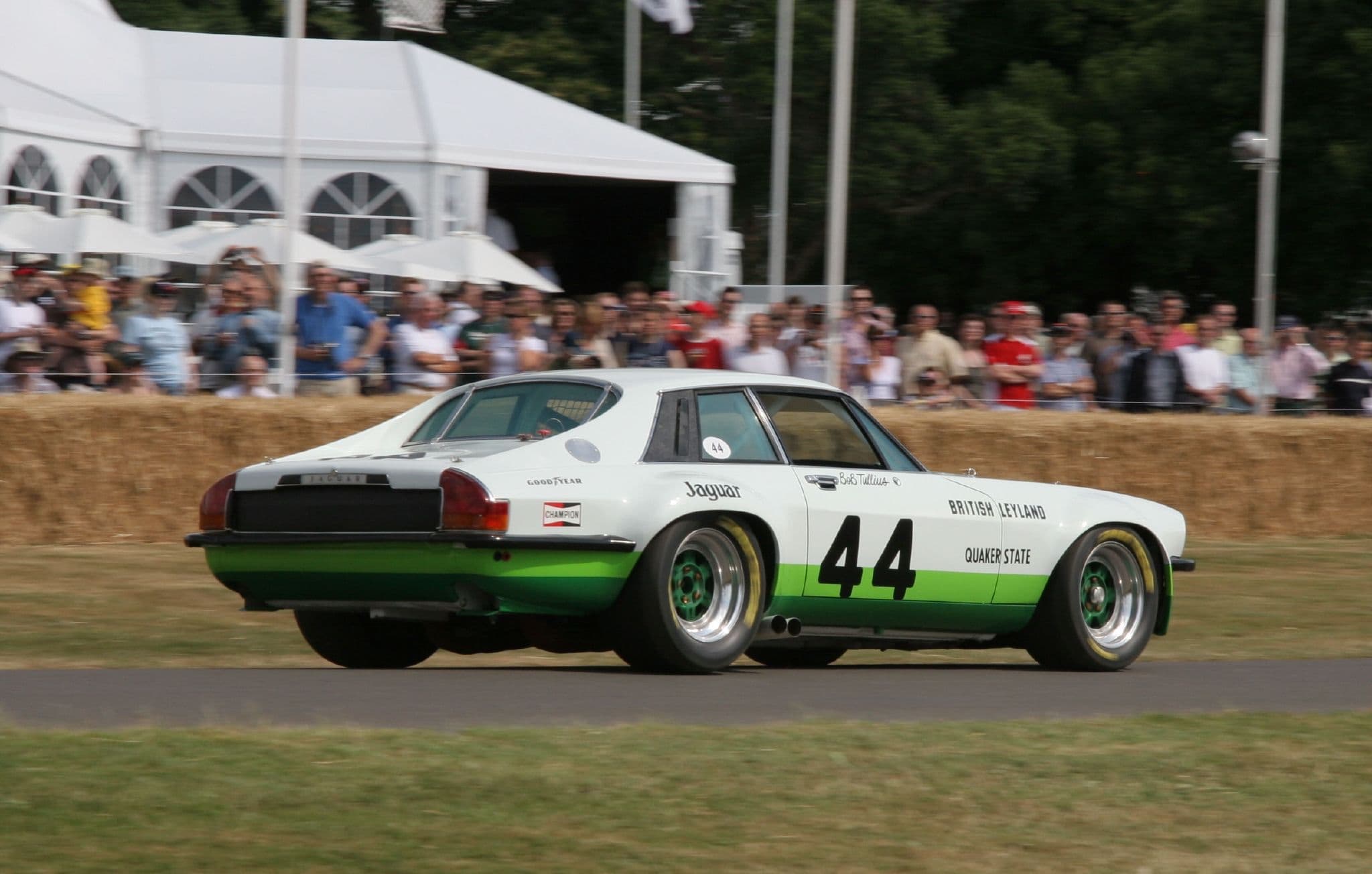
About the pictureGroup 44's Jaguar XJ-S at Goodwood in 2006

A white and green Jaguar XJ-S racing car, number 44, running uphill past straw bales and a crowd.
Stand-in The Jaguar XJ-S that Group 44 raced in the Trans-Am before its TR8s, at the Goodwood Festival of Speed in July 2006: a stand-in, not a picture of anyone on this page.Brian Snelson from Hockley, Essex, England, CC BY 2.0

The TR8 had no single father. Its shape came from British Leyland's Austin-Morris studio, its engine from Rover, its launch from Jaguar Rover Triumph's office in New Jersey, and its fame from a racing team in Virginia and four American magazines. The British project brought in Rover's men at Solihull and BL Motorsport's at Abingdon. Everyone here with a record of their own has a card below; the sections say who did what, and the history tells the story they shared.⁠source 1​source 2

Design and engineering

The wedge was drawn by the Austin-Morris studio under Harris Mann, as the TR Drivers Club and Mike Cook both record, and Triumph's own design for the car lost to it. The TR Register names Spen King as the technical director who led the engineering, and Ate Up With Motor credits Giovanni Michelotti with the convertible's body. The TR8 itself was these men's TR7 with a V8, and their work belongs mainly to the TR7's story.

Jeff Herbert, managing director of Rover-Triumph in England, told Michael Lamm that his staff had done most of the work of meeting the American rules at Goodyear's test facility near Laredo, Texas, as Lamm recalled it in 1999. The Lucas engineer on the TR8's injection, whose name triumphtr8.com spells two ways, was sure, it reports, that the injected engine made the lower of its two ratings.⁠source 3​source 1​source 4​source 5​source 6​source 7

Contents

Jaguar Rover Triumph in America

Michael L. Cook, known as Mike, ran the company's press relations in America and booked the hotels for all three of the TR8's planned launches, the two that were cancelled and the one held in San Diego in March 1980; years later he wrote the car's history for Special Interest Autos and the book Triumph Cars in America. At the launch, Lamm recalled, the company's president, Graham W. Whitehead, told the writers that the United States was British Leyland's biggest market overseas, worth about $2 billion a year, and its vice-president of sales and marketing, Michael Dale, asked each of them what they thought of the TR8. The company's competition department, whose contacts for the SCCA's prize money in 1980 were Mike Barratt in New Jersey and Stephen Froines in California, backed the car in amateur racing.⁠source 1​source 6​source 8

Contents

The British project

The right-hand-drive TR8 was planned and stopped by product planning: triumphtr8.com quotes the product planner, whose name it spells Dennis Chick, on the approval of March 1980, the cancellation early in 1981 and the notice of 14 May 1981 that ended the TR7 and TR8. The project's manager, Garry Owen, was copied on BL Motorsport's memo about the development car, and told the project's story in Practical Classics in September 1997. John Micklewright, the plant director at Rover's Solihull works, was the memo's addressee. Martin Cox of BL's press department told triumphtr8.com that, to the best of his knowledge, the press office never prepared a TR8. Above them all was BL's chairman from November 1977, Michael Edwardes, whose cuts, Ate Up With Motor writes, closed Speke, Canley and finally the car lines at Solihull.⁠source 2​source 9​source 10​source 5

Contents

BL Motorsport, Abingdon

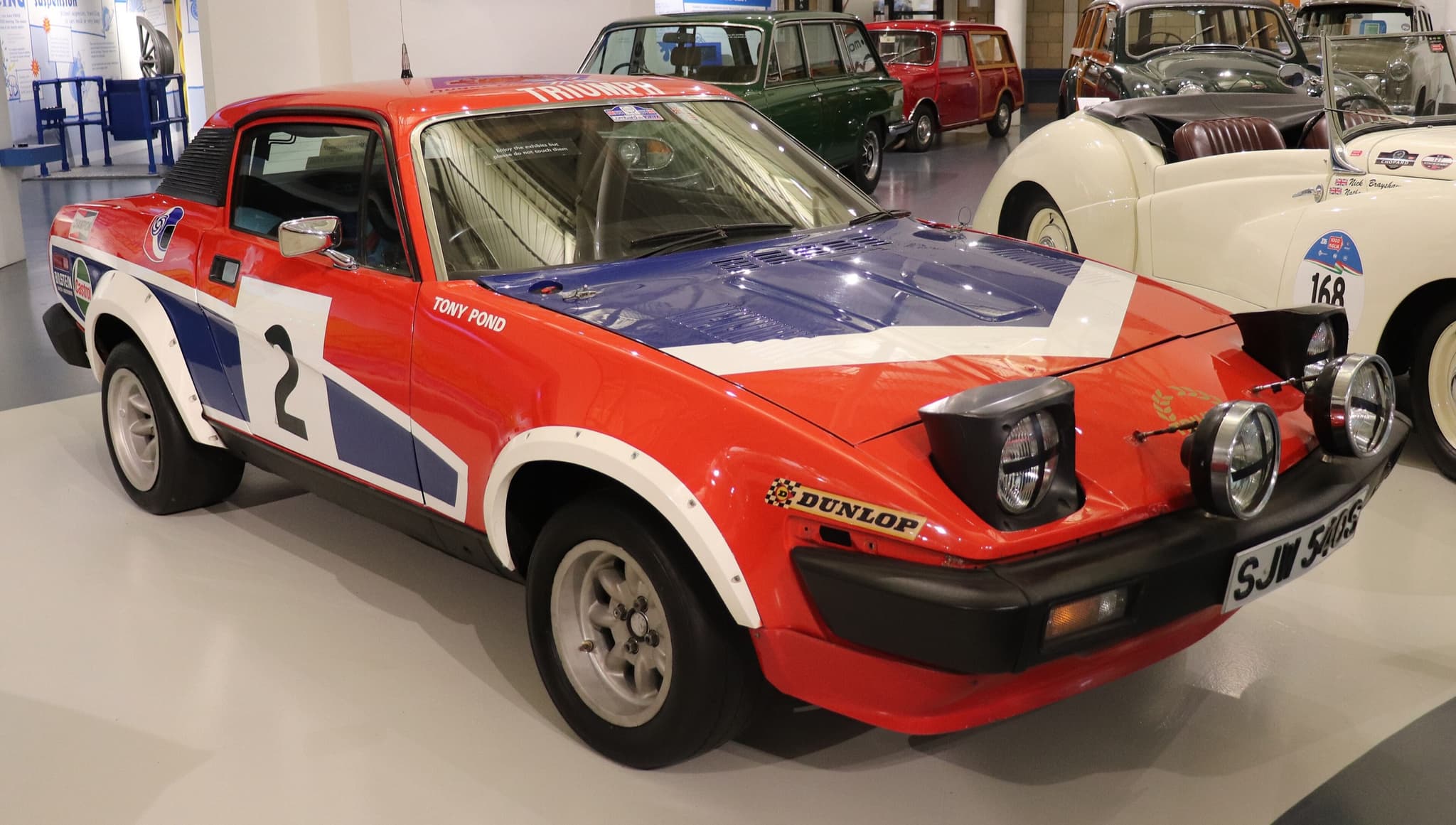
Richard Hurdwell, the chassis development engineer of the works rally team from July 1979, wrote the memo of 16 December 1980 that sets out BL Motorsport's work on the British development TR8, NWK 988W; his colleague on its engine is spelt two ways in the sources. The memo was copied to John Davenport, BL Motorsport's director, and David Wood, of its engine side. It credits Brian Owen at Abingdon, with John Moore of Automotive Products (Racing) at Leamington, with the car's ventilated brakes, and Albert Coates, at Solihull, with moulding its front spoiler. The works rally cars that Abingdon built are TR7 V8s, and their people belong to the TR7.⁠source 9​source 11​source 2

A red, white and blue TR7 V8 rally car, number 2, with four lamps in its nose, on a museum floor.
Tony Pond's name on the wing of a works TR7 V8 rally car, not a TR8, on show at the British Motor Museum, Gaydon, in June 2018: the kind of car BL Motorsport built at Abingdon.Vauxford, CC BY-SA 4.0

Contents

Racing

Bob Tullius drove in every race Group 44 ran with the TR8, from 1979 to 1981; the team he founded in 1965 with Brian Fuerstenau, his co-driver in 1979, was Jaguar Rover Triumph's official racing team. Bill Adam, a Canadian, drove for it in 1980 and 1981, with Tullius and in the team's second car, and John McComb, John Kelly and Pat Bedard drove for it in the long races. The team's page has their results. In the SCCA's C Production class, Ken Slagle won the national title of 1981; Lee Mueller and Ron Hunter for Huffaker Engineering and Bruce Qvale for Jaguar Rover Triumph were entered with him in 1980. In Canada, Peter Bulkowski raced a TR8 at Mosport and Trois-Rivières from 1980 to 1983. In rallying, John Buffum won the SCCA's pro rally title of 1979 in a car the American press called a TR8, though it belongs, with the works TR7 V8s, to the TR7. Racing gives the rest.⁠source 12​source 1​source 13​source 14

Contents

The press

WriterMagazineThe piece
Thos L. BryantRoad & TrackThe first drive, near Donington, early in 1979, with the Canadian Jacques Duval
John MilesAutocar"Miles Behind the Wheel: America's TR8", 1979
Fred M. H. GregoryMotor Trend"TR8 V-8: A mighty Triumph" and its sidebar, June 1980
Walt WoronRoad TestThe Best New Sports Car of 1980, July 1980
Don ShermanCar and DriverThe road test of August 1980
Don GreenProbably Motor TrendA 20,000-mile durability run, 1980 or 1981
Michael L. CookSpecial Interest Autos"1981 Triumph TR8: Fast and Last", 1996
Michael LammBritish Car"1st Drive in the Triumph TR8", 1999

Road & Track's June 1980 test carries no writer's name on the pages read. triumphtr8.com calls Autocar's writer John Miles, and once David; the column's own headline gives only his surname. The road tests tell what each of them found.⁠source 15​source 16​source 17​source 18​source 14​source 19​source 6​source 10​source 20​source 1

Contents

Record keepers

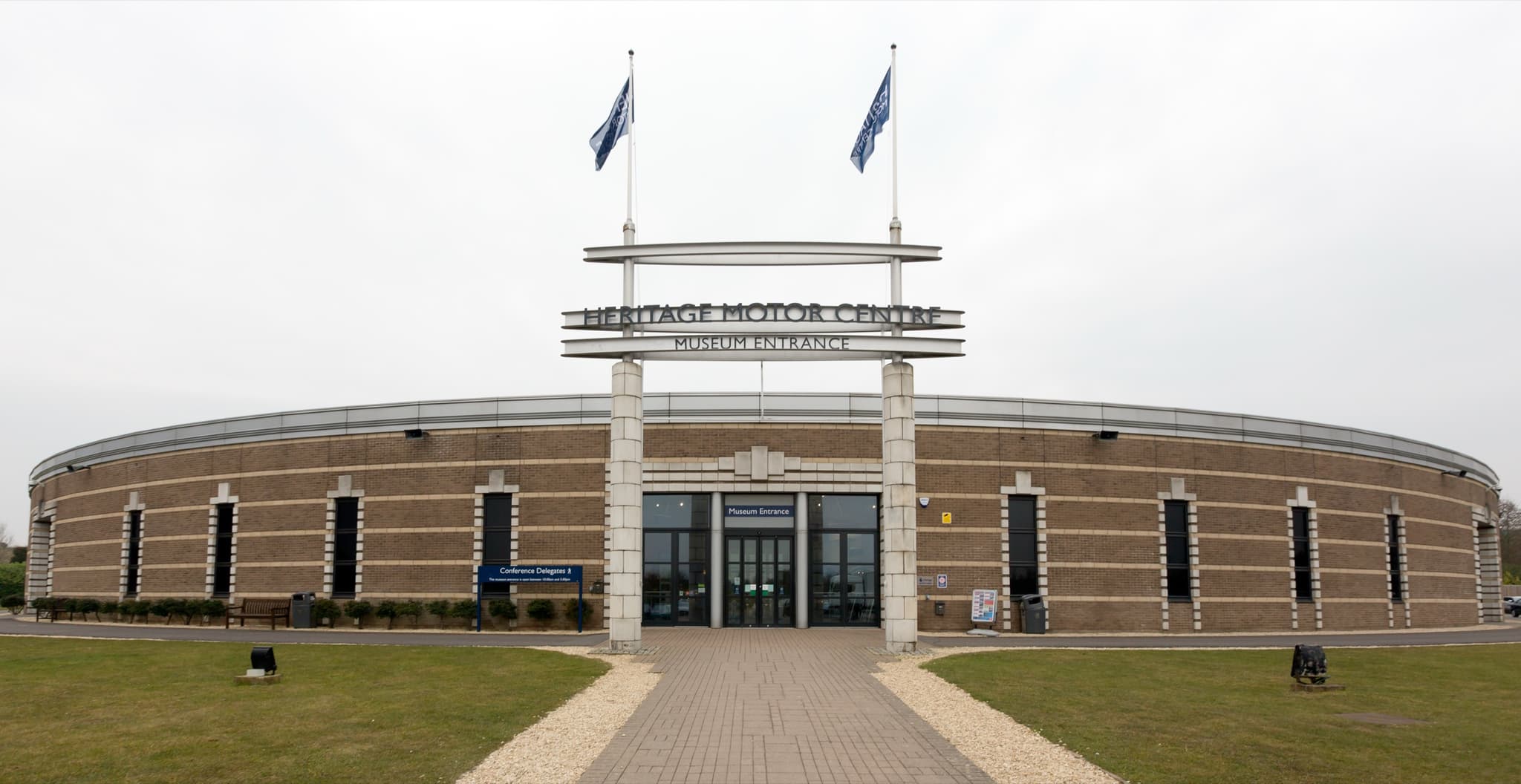
Much of what is known about the TR8 comes from enthusiasts and archivists. The TR Drivers Club's guide to the cars' numbers began as an article written in 1987 by Paul Towle, a past TR8 registrar, and was updated by Rex Holford and Mark Elbers; Holford also wrote the club's history of the TR8. The club checked the guide against articles by Anders Clausager, once archivist of the British Motor Industry Heritage Trust. James TenCate of the Triumph Wedge Owners Association pieced together the injected cars from engine numbers in 2012, drawing on Richard Connew's search of the build cards for the 1981 model year, and Gene Thompson wrote the association's pages on the cooling fans and the injection's control unit. Roy Ford, of Triumph's experimental department, saved its TR7 and TR8 records "from the skip", in Canley Classics' words, and passed them on; the experimental fleet's history and the Measham sales are known largely from them.⁠source 21​source 3​source 22​source 23​source 24​source 25

The circular brick museum building at Gaydon behind a lawn, its entrance sign reading Heritage Motor Centre.
The museum at Gaydon in March 2013, when its sign still read Heritage Motor Centre: the archive of the British Motor Industry Heritage Trust is kept there.Morio, CC BY-SA 3.0

Contents

People

  • Bill Adam

    Canadian racing driver. He drove Group 44's TR8 No. 44 with Bob Tullius in 1980 and 1981, and a second TR8, No. 4, alone in five IMSA races of 1980 (racingsportscars prints no entrant for it then; Group 44 entered No. 4 at Sebring in 1981). With Tullius he won the GTO class at Sebring, Mosport and Road America in 1980, and in No. 4 he won it at the Daytona Finale that November. He later shared Group 44's Jaguar XJR-5 with Tullius.

  • Armstrong

    Shared Peter Bulkowski's TR8 in the 1982 Mosport 6 Hours. racingsportscars prints only the surname.

  • Richard Barwell

    Was entered in a TR8, No. 48, for the 1982 Trans-Am round at Kent, Washington, but did not start.

  • Pat Bedard

    American racing driver. He shared Group 44's second TR8, No. 4, with John Kelly in the 1981 Sebring 12 Hours, finishing 20th.

  • Luc Behar

    Canadian. He was entered in a TR8, No. 42, for the 1981 Trans-Am round at Trois-Rivières, but did not start.

  • Berhar

    Shared Peter Bulkowski's TR8 in the 1981 Mosport 6 Hours. racingsportscars prints only this surname.

  • Bossom

    Drove KJJ Enterprises' TR8 in the 1985 Sebring 12 Hours; it retired without completing a lap. racingsportscars prints only the surname.

  • Peter Bulkowski

    Canadian racing driver. He raced a TR8 in the Mosport 6 Hours every year from 1980 to 1983, and in the Trans-Am at Mosport in 1981 and at Trois-Rivières in 1982; his best finish was 15th, 4th in the GTO class, at Mosport in 1982.

  • public relations manager

    Michael L. Cook

    Jaguar Rover Triumph's public relations manager in the United States through the TR8's launches, and later its historian: the author of "1981 Triumph TR8: Fast and Last" (Special Interest Autos, 1996) and Triumph Cars in America (2001). James TenCate calls him "Mike Cook (VTR)", of the Vintage Triumph Register.

  • Fesar

    Shared Peter Bulkowski's TR8 in the 1983 Mosport 6 Hours. racingsportscars prints only the surname.

  • founder

    Brian Fuerstenau

    Mechanic and co-founder of Group 44 Inc.; 1968 SCCA F Production national champion in a car racingsportscars lists as a Spitfire.

  • engineering liaison

    Richard Hurdwell

    BL Motorsport engineer: chassis development engineer for the works TR7 V8s from July 1979. His memo of December 1980 on a TR8 development car records that the rally TR8 being built for 1981 had been scrapped.

  • John Kelly

    American racing driver. In 1968 he drove TR4As in SCCA D Production, entered by Group 44 according to racingsportscars: 2nd in D Production at Cumberland on 12 May, when TR4As finished 1st to 4th, and winner of the D Production race at the American Road Race of Champions in Group 44's TR4A. He was the 1970 SCCA F Production national champion in a Spitfire, and drove Group 44's TR8s in the 1980 Daytona 24 Hours and the 1981 Sebring 12 Hours.

  • chief engineer, technical director

    Spen King

    British engineer (1925–2010). He joined Rover in 1945 and became its chief engineer in 1959; the Range Rover (1970) is his best-known car, and he also engineered the Rover SD1. After the 1968 merger he succeeded Harry Webster as Triumph's technical director and led the TR7's engineering. AROnline credits him with developing the 16-valve head; Ate Up With Motor credits it to Lewis Dawtrey.

  • Bruce Kulczyk

    Canadian. He entered the TR8 that he and Peter Bulkowski drove in the 1980 Mosport 6 Hours.

  • Lechnowski

    Shared Peter Bulkowski's TR8 in the 1983 Mosport 6 Hours. racingsportscars prints only the surname.

  • stylist

    Harris Mann

    British car stylist: British Leyland's chief designer in the 1970s and early 1980s, best known for the Allegro, the Princess and the TR7. Trained at engineering school and as an apprentice at the coach and bus builder Duple, he worked with Roy Haynes on the Marina and styled the wedge-shaped Austin Zanda show car (1969). His Longbridge team's wedge became the TR7: he said he went to the United States before drawing it, which made the design more extreme, and that it was meant to have a targa roof, which engineering could not make work. The convertible's prototype was Michelotti's, not his. He died in 2023, aged 85.

  • John McComb

    Racing driver for Group 44. In 1975, as British Leyland's Triumph team driver, he won the Northeast Division and then the SCCA D Production national championship in Group 44's TR6, at Road Atlanta on 2 November, leading from flag to flag; that September he finished 3rd overall in the Brainerd Trans-Am in the same car. He shared Group 44's TR8 with Bob Tullius and John Kelly in the 1980 Daytona 24 Hours (racingsportscars).

  • stylist

    Giovanni Michelotti

    Turin car stylist. He began his career in 1937 as an apprentice at Stabilimenti Farina; according to carrozzieri-italiani he opened his own design studio in Turin in 1949, the first in Italy devoted only to car design; the TSOA Newsletter of 1966 also dates the studio to 1949. His first contact with Standard-Triumph came in 1957: Harry Webster's obituary in the Telegraph says Webster "discovered" him, while Graham Robson says he was found through Raymond Flower and hired on Webster's recommendation with Alick Dick's approval. His first Triumph design was the one-off TR3 "Dream Car" on a TR3 chassis, shown at Geneva in 1957 according to later accounts; Krause says it followed a chance meeting with Alick Dick at a motor show. He went on to design the Italia (1959–62) on TR3A and TR3B running gear. On his own initiative he drew a one-off body for a BMW 507 chassis, shown at the Turin show in 1959, which BMW has owned since 2005. He styled the Herald (1959), whose separate chassis made the Spitfire possible; answering Webster's idea of a "Herald sports car", he built a single prototype in 1960, code-named "Bomb", and later restyled the car as the Mk IV of 1970. For the TR he styled the prototypes Zest (1958) and Zoom (1959) and the TR4 of 1961, which joined Zest's nose to Zoom's tail and kept Zoom's hardtop with its lift-out panel; the TR4A, TR5 and TR250 kept that body with new detail, and its centre section on the TR6 (1969), whose new front and rear Karmann designed because he was busy. According to his son Edgardo, his work for Triumph ended in the late 1970s with a restyle of the TR7 from coupé to spider; he died in January 1980. No source read links him to the Le Mans or Macau competition bodies.

  • Lee Mueller

    SCCA national champion in a Spitfire (F Production, 1969) and in a TR7 (D Production, 1979). In 1974–75 he drove Huffaker Engineering's V12 E-Type in SCCA B Production, winning on its debut at Seattle in August 1974.

  • project manager

    Garry Owen

    Managed the right-hand-drive TR8 project of 1980–81 at Canley and Solihull; he later wrote about it in Practical Classics (September 1997).

  • Ken Slagle

    American racing driver. He won the SCCA C Production national championship at the 1981 Runoffs at Road Atlanta in "a highly modified TR8", in Mike Cook's words.

  • founder

    Bob Tullius

    American racing driver. He bought a TR3 in 1960 and raced from 1961. In TR4s he won the SCCA national E Production championship in 1962, Triumph's first national class title by the importer's account, and D Production in 1963 and 1964; Triumph gave him one of Kas Kastner's Sebring TR4s. With Brian Fuerstenau and Dick Gilmartin he founded Group 44 Inc. in 1965; it won 14 SCCA national titles and three Trans-Am championships before closing in 1990. In 1968 he raced Group 44's TR250 in SCCA C Production. By the importer's count in September he had six wins in the Northeast Division, enough for at least a tie for its title, and three outside it. He was 3rd in C Production at the ARRC, and he co-drove the TR250K at Sebring. From 1969 to 1974 he raced Group 44's TR-6 in SCCA C Production, 2nd at the 1972 American Road Race of Champions, and showed it on British Leyland's stand at the 1972 London Motor Show; Severson writes that the last TR6 built went to him. In 1974–75 he raced Group 44's V12 E-Type in SCCA B Production: 2nd at the 1974 Runoffs by 0.8 s, and national champion in 1975. He had won the SCCA Trans-Am drivers' championship in 1977 and 1978 with a Jaguar XJ-S. From 1979 to 1981 Group 44, Jaguar Rover Triumph's official US racing team, raced the TR8 in IMSA and the Trans-Am. It won its class on the car's debut, the Watkins Glen 6 Hours of July 1979; Tullius won his class four times in 1979, in IMSA GTO and the Trans-Am, as Car and Driver and Lamm count them, and Group 44's No. 44 won the IMSA GTO class four times in 1980. British Sports Car Hall of Fame, first class (2017).
Contents

Sources

Sources are given as plain text; their addresses are on the sources page.

  • Primarymade at the time, by the maker or by people who were there
  • Referenceserious later work: clubs, specialists, magazines, books
  • Databaseresults and listings, entry by entry
  1. Michael L. Cook, "1981 Triumph TR8: Fast and Last", Special Interest Autos, no. 156, Nov–Dec 1996, pp. 10–17, pp. 10–17; pp. 11–12, the Austin-Morris studio under Harris Mann; p. 15, Cook's launches; p. 13, Group 44 and Slagle; byline. Reference
  2. triumphtr8.com, "Right hand drive TR8 Home Market UK" and "TR8 RHD Production Story", modified 23 May 2026, the British project's people; the product planner; Garry Owen; the Round Britain Run; the engine man on NWK 988W. Reference
  3. Rex Holford, "A Brief History of the TR8", TR Drivers Club, the design by Harris Mann; Rex Holford. Reference
  4. Malcolm Paris (compiler), "Triumph TR7 / TR7 V8 and TR8 Buyers Guide", TR Register, Spen King, technical director. Reference
  5. Aaron Severson, "Way of the Wedge: The Triumph TR7 and TR8", Ate Up With Motor, 5 Feb 2012, pp. 1–5, p. 4, Michelotti and the convertible; p. 4, Michael Edwardes. Reference
  6. Michael Lamm, "1st Drive in the Triumph TR8", British Car, Feb–Mar 1999, pp. 46–48, p. 47, Jeff Herbert; pp. 47–48: Whitehead, Dale, Cook; byline. Reference
  7. triumphtr8.com, "TR8 How Fast", 10 Feb 2026, the Lucas engineer. Reference
  8. Jaguar Rover Triumph Inc. (via the Triumph Wedge Owners Association), "1980 Competition Awards Program – SCCA National Events" (Competition News release), 1980, Competition News: the competition department's contacts. Primary
  9. R. Hurdwell (BL Motorsport, Abingdon), "TR8 Modifications" (memo, 4 pp.), BL Motorsport (via the Triumph Wedge Owners Association), 16 Dec 1980, p. 1, addressee and copies; pp. 1–4: Hurdwell, Davenport, Wood, Brian Owen, John Moore, Albert Coates. Primary
  10. triumphtr8.com, Pages (group): "TR8 Press Cars UK", "TR8 Press Articles and Cuttings" (21 Mar 2026), "Classic and Sports Car TR8 Article" (9 Apr 2026), 2026, TR8 Press Cars UK: Martin Cox, as quoted; the Practical Classics cutting; the name John Miles. Reference
  11. Chris Turner (credited by the club), "The Works Triumph TR7 V8 Rally Cars" and the car pages (group), TR Drivers Club, Hurdwell with the rally team from July 1979. Reference
  12. racingsportscars.com, "All Results of Triumph TR8" (1979–1999), drivers and entrants, 1979–85. Database
  13. Moss Motoring, "Bob Tullius, Group 44 Inc.", 5 Apr 2009, Group 44 Inc.. Reference
  14. Don Sherman, "Triumph TR8" (road test), Car and Driver, Aug 1980, pp. 36–40, p. 38, Buffum; p. 39, signed. Primary
  15. Thos L. Bryant, "New from Britain: Triumph TR7 Convertible & TR8", Road & Track (reprinted by the TR Drivers Club), 1979, byline; Jacques Duval. Primary
  16. John Miles, "Miles Behind the Wheel: America's TR8", Autocar, 1979 (May, according to triumphtr8.com), "Miles Behind the Wheel". Primary
  17. Fred M. H. Gregory, "TR8 V-8: A mighty Triumph" (road test), with the sidebar "A String of Triumphs", Motor Trend, Jun 1980, byline. Primary
  18. Walt Woron, "1980 Triumph TR8 Convertible: RT's Selection for 'Best New Sports Car of 1980'", Road Test (US), Jul 1980, pp. 16, 83–86, p. 16, byline. Primary
  19. Don Green, "Triumph TR8: a 20,000-mile durability run", Motor Trend (probably: not printed on the scans), 1980 or 1981, byline. Primary
  20. Road & Track, "Triumph TR8: Good news from the other side" (road test), Jun 1980, pp. 76–79, pp. 76–79: no writer named. Primary
  21. Paul Towle and Rex Holford (update) and Mark Elbers (update), "TR7 & TR8 Identification & Production Data Explained", TR Drivers Club, 1987, updated (© 2016), authors: Paul Towle, Rex Holford, Mark Elbers; Anders Clausager's articles. Reference
  22. James TenCate, "Production Numbers – A Detective Story", TR Driver (TR Drivers Club), 2012 no. 2, James TenCate; Richard Connew's count of the build cards. Reference
  23. Triumph Wedge Owners Association, Document pages (group): "TR8", "Memos", "Brochures", TSB indexes, "Deciphering the Wedge", "Component Serial Numbers", "TR8 Cooling Fan System", "TR8 ECU", Gene Thompson's technical pages. Reference
  24. Canley Classics, "TR7 & TR8 Experimental Records", Roy Ford's archive. Primary
  25. triumphtr8.com, Pages (group): "FHC V8's 'TR8 Pre Production'", "TR8s with Creative Histories" and its linked case page, "Triumph TR8 RHD vs LHD: Factory Conversion Myths", "Buying a TR8", "TR8 Test, Development. EXP cars", Roy Ford. Reference

Contents