Triumph TR8 History
From the V8 Bullet prototypes of 1973 to the last cars built at Solihull in October 1981: why the V8 came years after the TR7, how a postponed launch sent a run of unbadged coupés to America as company cars, and why the convertible, on sale from 1980, sold slowly.
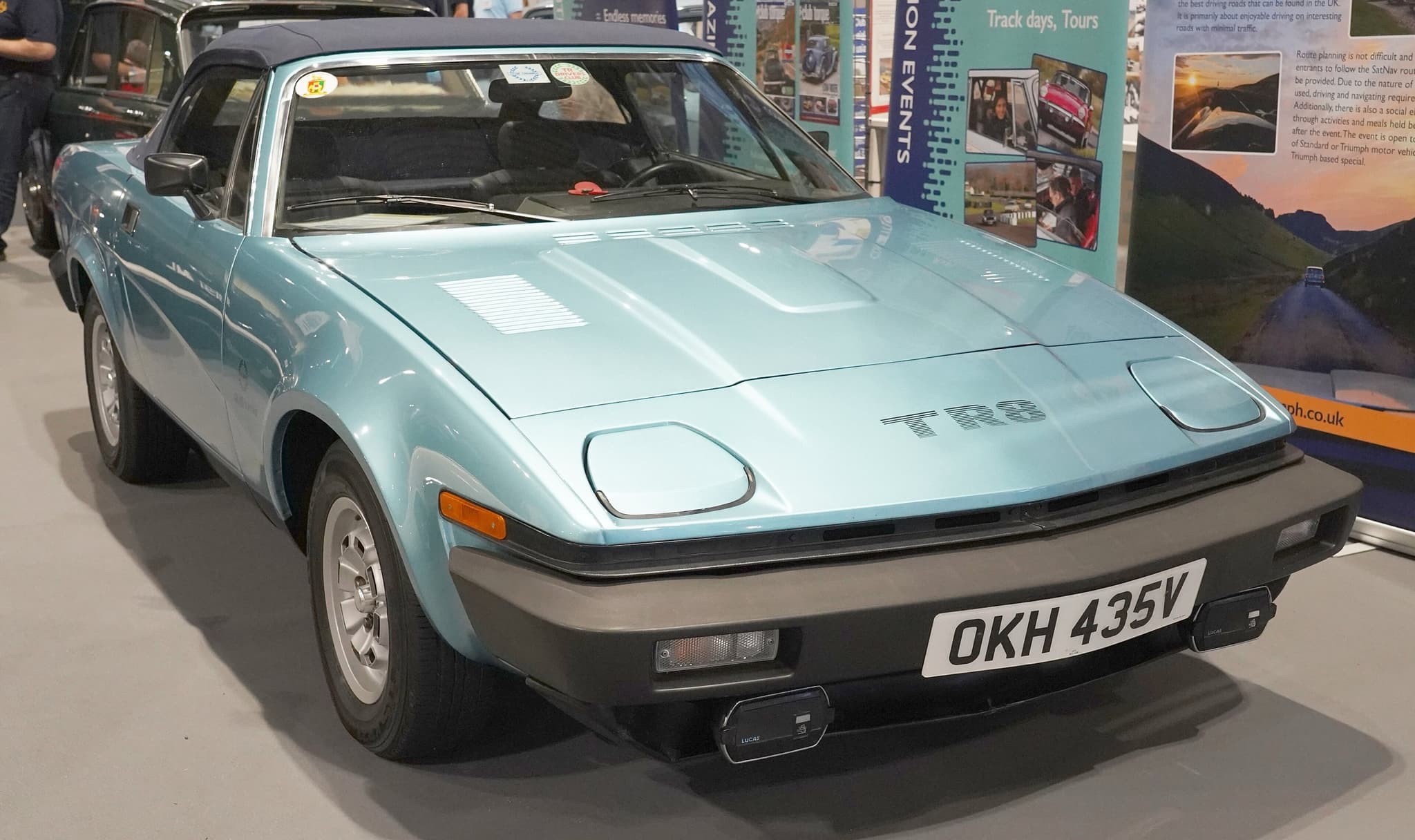
On 1 April 1978 the FIA recognised the Triumph TR8 for Group 4. Apart from prototypes, the only TR8s yet built were a run of coupés made at Speke the year before, most of them by then in North America as company cars without a badge on them, and BL had postponed their launch indefinitely. Nobody could buy a new TR8 for another two years.source 1source 2source 3source 4
Before and after
The TR8 belongs to the family it was planned with. Mike Cook, Jaguar Rover Triumph's public relations manager in America when the TR8 was launched, writes that BL's sports-car policy of 1971, project Bullet, was meant to replace both the TR6 and the MGB. The four-cylinder TR7 was its first car, on sale in America from 1975, and for a while it was sold beside the TR6 it was to replace: Motor Sport reported in February 1975 that it would be sold "alongside the TR6 in USA British Leyland showrooms". The last TR6 was built at Canley in July 1976.
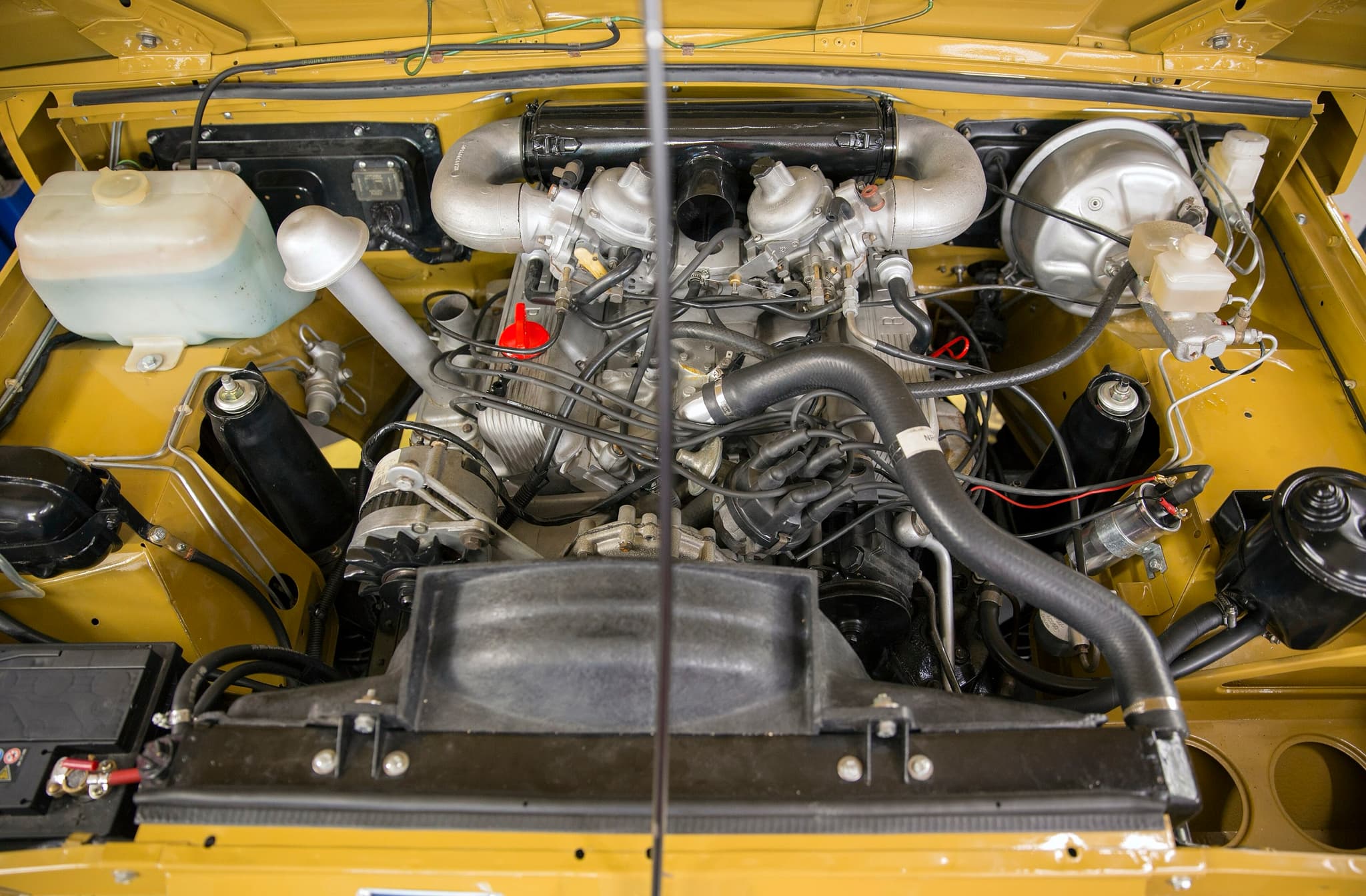
The TR8 came from the same body, and from Rover it took the SD1 3500's V8, its five-speed gearbox (transmission) and its axle; Road & Track noted in 1979 that the SD1 had been named European Car of the Year in 1977. BL's earlier Rover-engined sports car, the MGB GT V8 of 1973–76, had never been sent to America. Road & Track reached further back for a precedent:
The TR8 concept is bound to stir memories of the Sunbeam Tiger of the Sixties, but the Triumph is a much more civilized car with braking, steering and handling characteristics designed to mate with the V-8 engine's performance capabilities.
Nothing followed the TR8. The Lynx, a longer 2+2 on the same underpinnings, and the Broadside, planned for 1983 with a longer wheelbase and a V8 or an O-series four, never reached production, and neither did the MG Boxer, an MG-badged TR7; their story belongs to the TR7. Cook counts the TR7 and TR8 of 1981 as the last TRs. The last car of any kind to wear the Triumph name was the Acclaim, based on a Honda, which ended in June 1984; its successor was badged as a Rover.source 2source 5source 6source 7source 8source 9source 10source 11source 12source 13
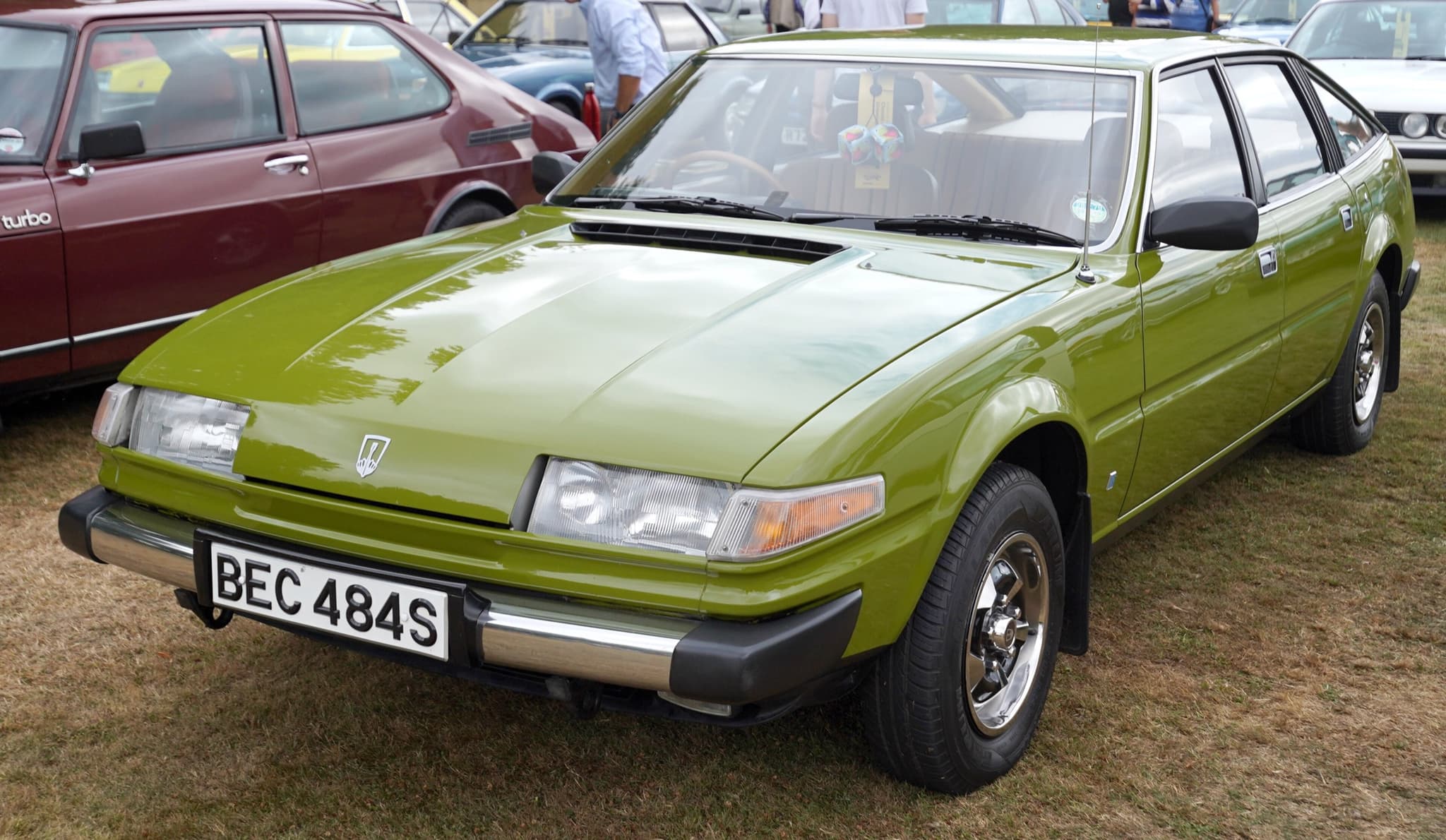
Bullet and the V8, 1969–77
The TR Drivers Club dates the wedge to 1969 at Canley, under the code name Bullet, with two engines in view: Triumph's two-litre slant four and Rover's aluminium V8. Cook dates the policy behind it to 1971, when Triumph's own design for an open two-seater lost to the wedge offered by the Austin-Morris studio under Harris Mann. Either way the V8 was in it from the beginning: "From the start, four-cylinder and eight-cylinder models were developed in parallel," Cook writes.
It began as a coupé because America seemed about to outlaw open cars. Road & Track recalled in 1979 that "it seemed that U.S. lawmakers were going to ban convertibles", and by late 1973, when a federal court overruled the proposed rules on roof strength, the closed car was too far along to change.
The TR Drivers Club lists four V8 prototypes of the TR7 family: X840, X843, X858 and X859, the first two registered TLB 254M and UXC 582M. According to triumphtr8.com, X840 was registered in August 1973 and first ran with Bosch fuel injection, later swapped for carburettors, and X843 followed in May 1974. Wikipedia, citing William Kimberley's guide of 1981, dates a first V8 prototype to 1972.
Then the V8 waited. Cook gives three reasons: the Stag's own three-litre V8 had not been approved for further production, the supply of Rover's engine was "severely limited by Rover's production capacity and future model program", and there was no five-speed gearbox strong enough for it. So the TR7 went first. It was shown to the American press at the end of January 1975 and reached the showrooms that April, and by 1976, the TR Drivers Club says, American dealers were asking for the V8.source 7source 2source 9source 14source 15source 16
The Speke coupés and homologation, 1977–78
Speke, in Liverpool, made the first TR8s from February to October 1977: coupés to American specification, numbered with an ACN prefix and meant to go on sale as 1978 models. British Leyland's American company had their sales brochure printed that September. The launch never came. Cook writes that poor build quality at Speke, the plant's coming closure and doubts over how fast production could start in Coventry led BL to postpone it indefinitely. What became of the coupés, and how many there were, is on the coupé's page.
The TR8's FIA recognition for Group 4, number 654, followed in April 1978.
Speke did not last the year. Production of American-specification TR7s there ended in May 1978, the TR Drivers Club says because of labour problems, and moved to Canley, where assembly began that October.
Canley: coupés and the first convertibles, 1978–80
At Canley the coupé went on under the TCN prefix, though most of the numbers set aside for it in the 1978 and 1979 model years were probably never used, in the TR Drivers Club's view. The convertible followed. About 10 prototype convertibles were built at Speke in April and May 1978 and given V8s at Canley late that year; Canley's own TR8 convertibles came next, for the 1979 model year, in numbers no source read gives.
Early in 1979 Thos L. Bryant of Road & Track drove the "only U.S.-specification TR8 available", near Donington, with Jacques Duval. He found it "quick, responsive and fun to drive", and Jaguar Rover Triumph then planned to put the TR8 on sale "in July", with a TR8 convertible to follow in America "by October or November". Autocar's John Miles fared worse in 1979 (in May, according to triumphtr8.com) with YDU 617S, a white left-hand-drive engineering coupé collected from Browns Lane; the road tests tell what he found. From October 1979 Canley's cars carried a new 14-character vehicle identification number, which identification decodes.
On the track the TR8 was already winning: Group 44, Bob Tullius's team, began racing one in July 1979 and won its class at once.source 17source 4source 9source 10source 19source 20source 2
The US launch, 1980
Mike Cook organised the press launch:
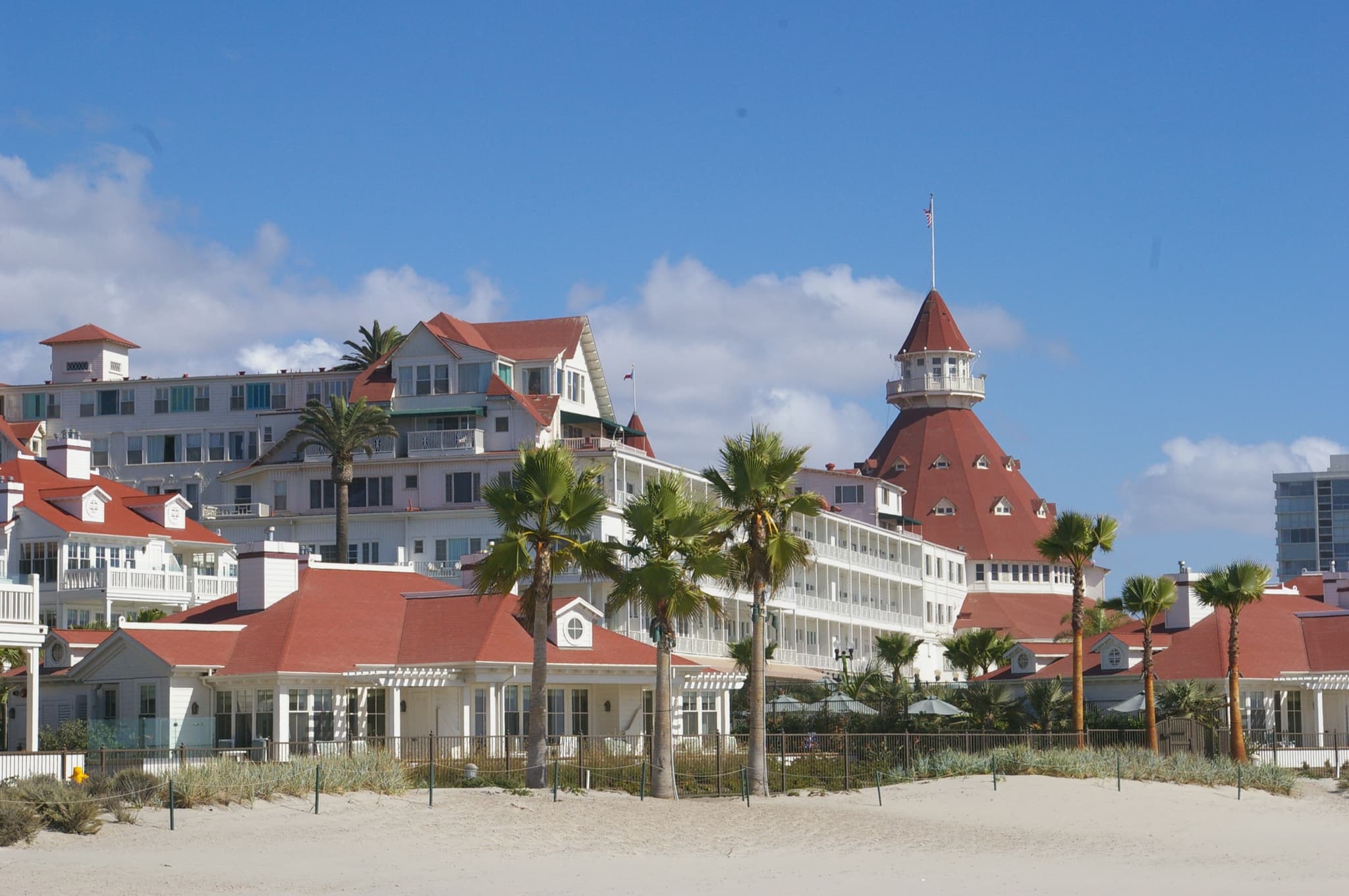
As Public Relations Manager for Jaguar Rover Triumph, I had booked hotels for 1978 and 1979 press introductions in Tucson and Monterey but had to cancel both. We finally did the deed at the Hotel del Coronado in San Diego, in March of 1980.
Michael Lamm, recalling the San Diego drive in 1999, put it a year earlier; the road tests explain why March 1980 is right. The cars reached the dealers that spring: Lamm gives May, and AROnline gives May in one place and June in another. In Canada the TR8 arrived early in 1980, beside the Rover 3500.
The convertible came with two engines. California's cars of the 1980 model year were injected, under the certificate the state's Air Resources Board signed on 18 March 1980, and the other 49 states' had carburettors. Road & Track's June issue warned that "only 2500 TR8s will be built before the 1980 model year is out", so buyers should get in line. They did not. Within months the price was being cut, with a $1,000 rebate by the end of 1980 in Cook's account, and Ate Up With Motor says that BL was offering substantial rebates on new TR7s and TR8s by the 1981 model year.source 2source 3source 5source 21source 11source 16source 22source 12
Solihull and the right-hand-drive project, 1980–81
Rover's Solihull plant began building TR7s on 1 April 1980, a first batch of 1981 model-year cars was built at Canley in May and June, and car assembly at Canley stopped that August. The 1981 model year brought injection to every North American TR8 and, Cook notes, cloth seats in place of the plaid of the 1980 model year.
Britain was to have the TR8 too. According to the programme's product planner, as triumphtr8.com quotes him, a right-hand-drive "Home Market" TR8 was approved at the end of March 1980, and the first cars were built that April. By the time the last of the pilot run was finished, on 31 March 1981, the project had been cancelled at the first planning meeting of the year: his reason was that BL would not start selling and servicing a British V8 while the whole programme's future was in doubt. One of those cars, NWK 988W, went to BL Motorsport at Abingdon late in 1980 to try out a different engine and chassis specification for Britain and Europe.
Solihull also built cars for Americans in Europe. triumphtr8.com counts, from the build cards, more than 40 personal-export TR8s made between June and September 1981 for American and Canadian service personnel and diplomats, who could buy them free of tax.source 17source 23source 24source 2source 25source 26source 27
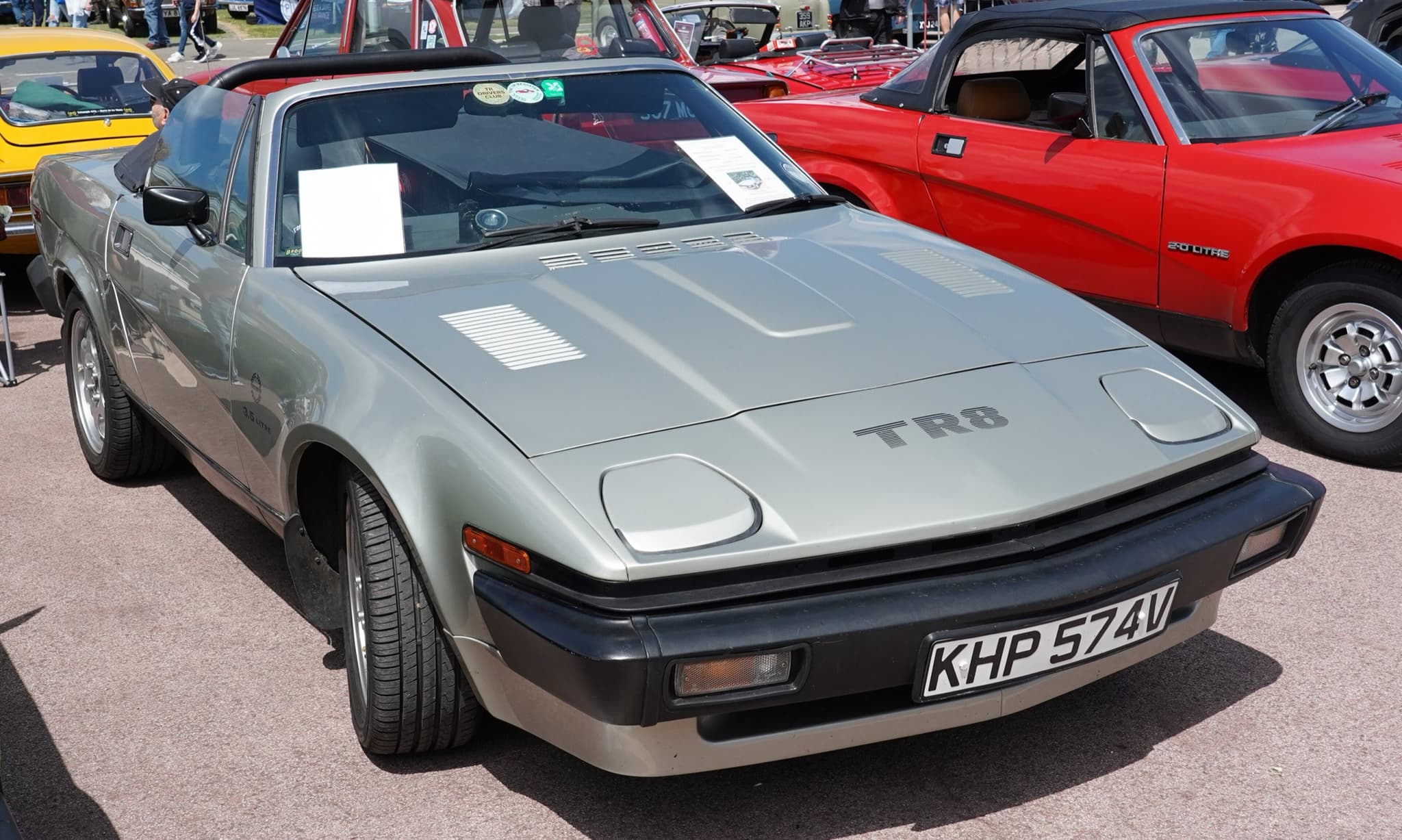
The end, 1981
BL announced the end of the TR7 and TR8 in May 1981: the product planner, as triumphtr8.com quotes him, dates the notice to 14 May. In June BL decided to sell the right-hand-drive cars and its left-hand-drive development, test and experimental TR8s, and Canley's experimental records list 36 TR8s sold at BCA's auctions at Measham on five Fridays between 7 August and 4 September 1981. A few cars were kept back: the records list "North American Mothball Vehicles" kept against possible litigation, and one experimental car, EXP 923, stayed with the company until 2003.
The last TR8s were built that October. triumphtr8.com gives 408533, built on 12 October 1981, as the last by chassis number and 408405, finished on 20 October, as the last by date, and James TenCate of the Triumph Wedge Owners Association found the highest injected engine number he traced, 14E00799, in a car built on 12 October. The highest chassis number of any TR7 or TR8, 408534, belongs to a right-hand-drive TR7 convertible in the British Motor Museum's collection. Canada took some of the last as its 1982 models: an enthusiast site, tr8.com, recorded about 70 such TR8s, and Canadian dealers advertised them.
Cook's verdict is that "it took nine years from concept to production, by which time it was too late for both the TR8 and Triumph as a company", and he adds that by 1980 the American economy was weak and the pound strong against the dollar. Ate Up With Motor adds that the V8 arrived after the Iranian revolution had driven up the price of oil, and Lamm remembered 1981, "the TR8's last season in the States", as no better than 1980.source 25source 12source 28source 4source 29source 24source 7source 17source 30source 21source 2source 3
Total production
No one count of TR8s is agreed. BL's own table, the TR Drivers Club's and triumphtr8.com's, and the total Cook quotes from Kimberley's guide of 1981 give between them about 2,700 to 2,800, by counts that never state their rules; the versions page explains how the tables were kept. Identification sets every figure beside its source.source 17source 7source 29source 24source 2source 3
Rivals
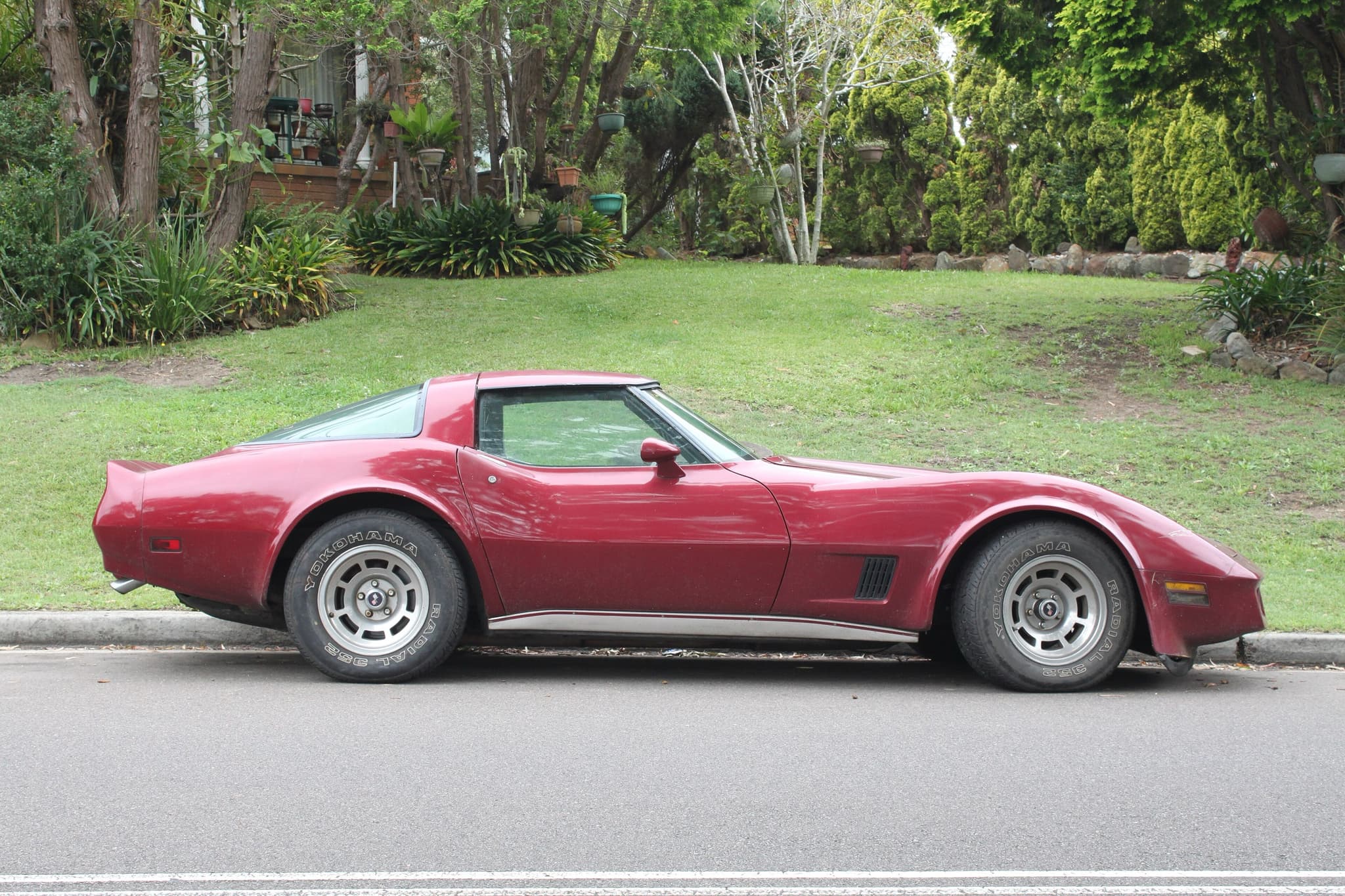
The American magazines set the TR8 against four cars: the Chevrolet Corvette, the Datsun 280-ZX, the Mazda RX-7 and the Porsche 924. Their prices in 1980, as printed:
| Car | Price | Printed by |
|---|---|---|
| Mazda RX-7 | $8,295 | Road & Track, June 1980 |
| Datsun 280-ZX | $11,299 | Michael Lamm, 1999, for May 1980 |
| Chevrolet Corvette | $13,140 | Road & Track, June 1980 |
| Chevrolet Corvette | $15,599 | Michael Lamm, 1999, for May 1980 |
| Porsche 924 | $16,770 | Michael Lamm, 1999, for May 1980 |
The TR8's own prices when new are in the specifications. Lamm set his figures for the rivals beside the TR8's to show the "stiff price competition" it faced, and Ate Up With Motor put the TR8 at about $2,000 more than a TR7 or a 280ZX and $4,000 more than an MGB.
It was quick for the money. Road & Track's comparison box put it between the RX-7, which took 9.2 seconds from rest to 97 km/h (60 mph), and the Corvette, which took 7.7, and Car and Driver found "only one sub-$20,000 sports car that can beat its speediness—the hoary old Corvette". Braking was its weak point: Road & Track's TR8 needed 55 m (179 ft) to stop from 97 km/h, the RX-7 46 m (151 ft).
The sales went the other way. No source read gives the rivals' American sales for 1980, but AROnline writes that the Datsun Z and the RX-7 had sold about 50,000 a year in America in some years, and Lamm recalled that Triumph's American sales of every model had fallen to 12,733 in 1979. On the track the TR8 did better: in 1980 TR8s won IMSA's GTO class at Sebring, against Porsches and Corvettes, and in four more races.source 11source 31source 3source 12source 5source 20
The TR7 and TR8
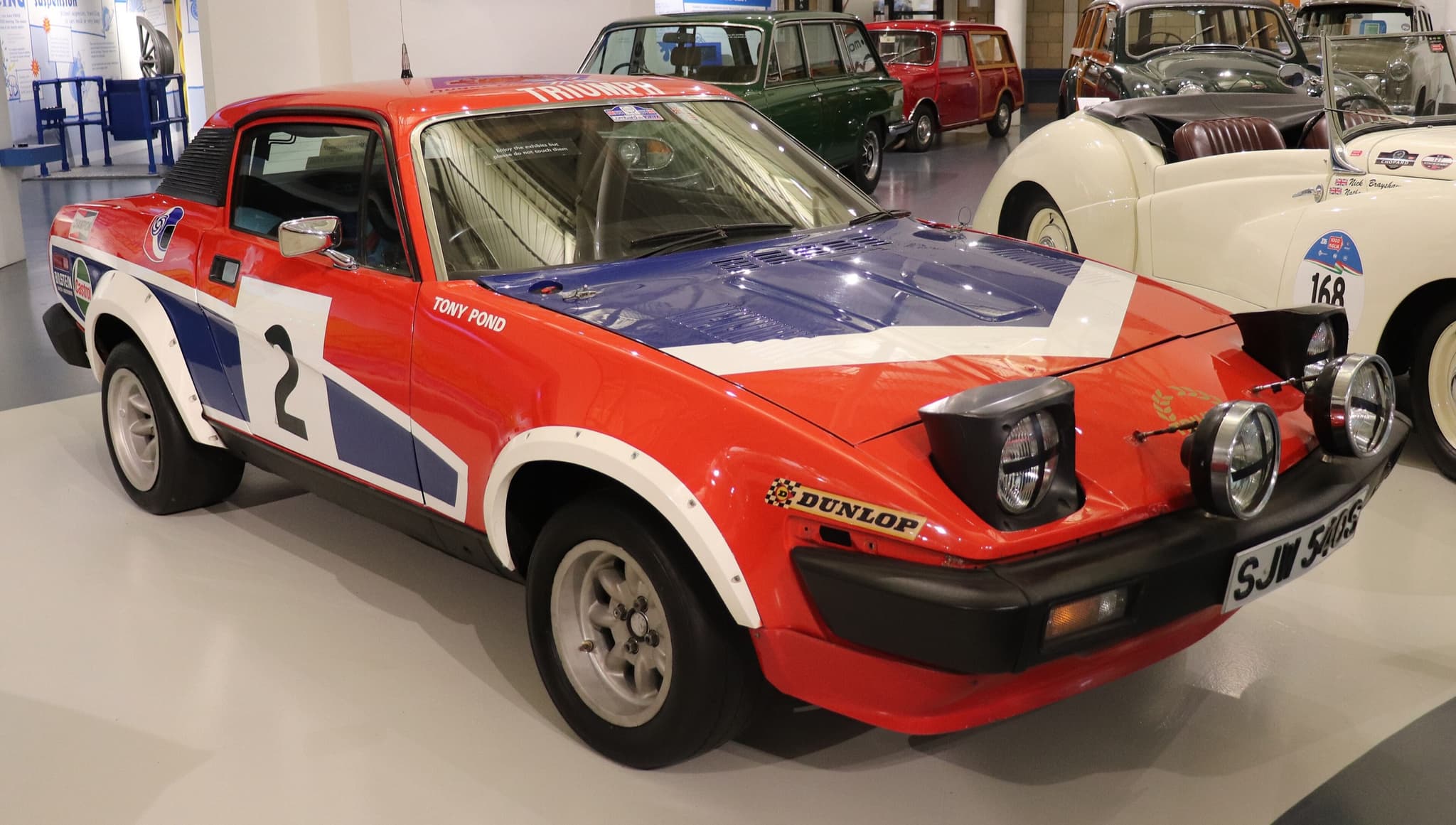
The TR8 was built where the TR7 was: at Speke in 1977 and 1978, at Canley from 1978 to 1980, and at Solihull in 1980 and 1981. How the plants were run, the strike that closed Speke and the move to Solihull belong to the TR7's story, and so do BL Motorsport's TR7 V8 rally cars, which raced on the TR8's recognition. This site keeps to the cars that left the factory as TR8s, and to the TR7s later given V8s that are taken for them.source 17source 12source 1
Sources
Sources are given as plain text; their addresses are on the sources page.
- Primarymade at the time, by the maker or by people who were there
- Referenceserious later work: clubs, specialists, magazines, books
- Databaseresults and listings, entry by entry
- Uncheckedencyclopaedias and enthusiast sites: cited beside a good source, named in the sentence, or marked Unchecked
- Chris Turner (credited by the club), "The Works Triumph TR7 V8 Rally Cars" and the car pages (group), TR Drivers Club, FIA recognition, 1 April 1978; FIA recognition, Group 4, 1 April 1978, no. 654; the rally cars on the TR8's recognition. Reference
- Michael L. Cook, "1981 Triumph TR8: Fast and Last", Special Interest Autos, no. 156, Nov–Dec 1996, pp. 10–17, p. 13, the coupés as company cars; the launch postponed; pp. 11–12, BL's 1971 sports-car policy, project Bullet; p. 17, the last TRs; pp. 11–13, Bullet, Harris Mann's studio, the roof-crush rules, why the V8 waited; p. 13, the launch postponed indefinitely; p. 13, Group 44's first event; p. 15, the hotels booked and cancelled; San Diego, March 1980; p. 16, the $1,000 rebate; p. 10, the cloth trim for 1981; p. 11, "nine years from concept to production"; p. 15, the pound and the economy; p. 16, Kimberley's total. Reference
- Michael Lamm, "1st Drive in the Triumph TR8", British Car, Feb–Mar 1999, pp. 46–48, p. 48, dealerships in May 1980; pp. 47–48, the launch as recalled; dealerships in May 1980; p. 48, 1980 and 1981; p. 48, editor's note; pp. 47–48, the rivals' prices in May 1980; Triumph's 1979 sales. Reference
- triumphtr8.com, Variant pages (group): "FHC TR8 (ACN) 1977", "FHC TR8 (TCN) 1978–1979", "TR8 (TCV) 1979 DHC", "TR8 (TP) 1980", "DHC TR8 (SAT) 1981/82", DHC TR8 (SAT) 1981/82, the last cars in October 1981; FHC TR8 (TCN); TR8 (TCV) 1979 DHC; DHC TR8 (SAT) 1981/82: 408533, 12 October 1981. Reference
- Chris Cowin, "History: Exporting British cars to the USA – Part Two", AROnline, 31 May 2025, updated 21 Oct 2025, TR6 passage, July 1976; the MGB GT V8; TR8 passage: May 1980 in the text, June in the timeline; the Datsun Z and the RX-7 in America. Reference
- Clive Richardson ("C.R."), "The TR7 makes a quiet British bow", Motor Sport, Feb 1975, p. 30, the TR7 sold alongside the TR6. Primary
- Rex Holford, "A Brief History of the TR8", TR Drivers Club, the TR8 as the TR7 with the V8; Bullet at Canley, 1969, with two engines; X840, X843, X858, X859; US dealers asking for the V8 by 1976; labour problems and the move to Canley; "The last car was built on 5th October 1981"; batch table; "approximately 2,800". Reference
- Malcolm Paris (compiler), "Triumph TR7 / TR7 V8 and TR8 Buyers Guide", TR Register, the TR8 as the V8-engined TR7. Reference
- Thos L. Bryant, "New from Britain: Triumph TR7 Convertible & TR8", Road & Track (reprinted by the TR Drivers Club), 1979, TR8 section: the Sunbeam Tiger; the SD1, European Car of the Year; TR8 section: "it seemed that U.S. lawmakers were going to ban convertibles"; TR8 section: Donington, Jacques Duval, "in July", "by October or November". Primary
- John Miles, "Miles Behind the Wheel: America's TR8", Autocar, 1979 (May, according to triumphtr8.com), p. 2, the SD1's gearbox and axle; pp. 1–2, YDU 617S from Browns Lane. Primary
- Road & Track, "Triumph TR8: Good news from the other side" (road test), Jun 1980, pp. 76–79, data panel, the final drive; pp. 76–77, the two engines; "only 2500 TR8s will be built"; pp. 76–77 and the At a Glance box: the RX-7 and the Corvette; braking. Primary
- Aaron Severson, "Way of the Wedge: The Triumph TR7 and TR8", Ate Up With Motor, 5 Feb 2012, pp. 1–5, p. 4, the Lynx, the Broadside and the Boxer; the Acclaim, June 1984; p. 4, "finally went on sale in the U.S. later in 1979"; p. 4, rebates by the 1981 model year; p. 4, May 1981; "apparently ended in mid-summer"; p. 4, the price against the 280ZX, the TR7 and the MGB; p. 4, the three plants. Reference
- Hilton Holloway, "Triumph revival on again", Autocar, 29 Feb 2012, the Acclaim, 1984. Reference
- triumphtr8.com, Pages (group): "FHC V8's 'TR8 Pre Production'", "TR8s with Creative Histories" and its linked case page, "Triumph TR8 RHD vs LHD: Factory Conversion Myths", "Buying a TR8", "TR8 Test, Development. EXP cars", "FHC V8's 'TR8 Pre Production'": X840 and X843, their registration dates, Bosch injection. Reference
- Wikipedia (EN), "Triumph TR8", 2026, Background, citing Kimberley ch. 3. Unchecked
- Walt Woron, "1980 Triumph TR8 Convertible: RT's Selection for 'Best New Sports Car of 1980'", Road Test (US), Jul 1980, pp. 16, 83–86, p. 16, the TR7 coupé introduced in January 1975; data box p. 86, the two engines. Primary
- Paul Towle and Rex Holford (update) and Mark Elbers (update), "TR7 & TR8 Identification & Production Data Explained", TR Drivers Club, 1987, updated (© 2016), Speke section "ACN": February to October 1977; US-specification production moved to Canley; Canley section: TCN coupés, the ACT prototype convertibles, TCV 200001; the 14-character VIN from October 1979; Solihull section: production from April 1980; Canley's car assembly stopped in August 1980; 402001–402026; 408534, the last TR7/TR8 by chassis number; BL production table (b) and its note; Speke, Canley and Solihull sections. Reference
- British Leyland Motors Inc. / Jaguar Rover Triumph (via triumphtr8.com), TR8 documents (group): handbooks AKM4335 and AKM4779, workshop and injection guides, parts books, and two sales brochures, the early US sales brochure, printed "9/77". Primary
- triumphtr8.com, Pages (group): "TR8 Press Cars UK", "TR8 Press Articles and Cuttings" (21 Mar 2026), "Classic and Sports Car TR8 Article" (9 Apr 2026), 2026, TR8 Press Cars UK: spring 1979. Reference
- racingsportscars.com, "All Results of Triumph TR8" (1979–1999), Watkins Glen 6 Hours, 7 July 1979; the 1980 IMSA GTO class winners. Database
- Chris Cowin, "History: Exporting British cars to Canada – Part Two: The British Leyland Years", AROnline, 19 Aug 2025, TR8 and Rover 3500 in Canada, early 1980; 1982 models advertised. Reference
- California Air Resources Board (via the Triumph Wedge Owners Association), California Air Resources Board executive orders A-5-47 (1979 model year), A-5-49 (1980) and A-220-5 (1981), with supplemental data sheets, 22 Feb 1979; 18 Mar 1980; Mar 1981, A-5-49, executed 18 March 1980. Primary
- Michael Hart, "Counting TR7 Spiders: A Day at the Gaydon Archive", Triumph Wedge Owners Association, © 2013, Solihull's build cards, from 1 April 1980. Reference
- James TenCate, "Production Numbers – A Detective Story", TR Driver (TR Drivers Club), 2012 no. 2, para. 3, every 1981 car outside the UK injected; 14E00799, a car built on 12 October 1981; para. 3, the range generally thought. Reference
- triumphtr8.com, "Right hand drive TR8 Home Market UK" and "TR8 RHD Production Story", modified 23 May 2026, RHD project production planning, as the product planner gave it; the programme ended, 14 May 1981, as the product planner gave it; June 1981; EXP 923 sold in 2003. Reference
- R. Hurdwell (BL Motorsport, Abingdon), "TR8 Modifications" (memo, 4 pp.), BL Motorsport (via the Triumph Wedge Owners Association), 16 Dec 1980, p. 1. Primary
- triumphtr8.com, "European Spec LHD TR8's", 27 Dec 2025, 1981 personal-export cars, from build cards. Reference
- Canley Classics, "TR7 & TR8 Experimental Records", BCA Measham section; "North American Mothball Vehicles". Primary
- triumphtr8.com, "Production Figures for the TR8", 5 Jan 2026, production page: 408405, 20 October 1981; production table. Reference
- tr8.com, "The 1982 Model Year TR7's & 8's", summary (2012 archive copy). Unchecked
- Don Sherman, "Triumph TR8" (road test), Car and Driver, Aug 1980, pp. 36–40, p. 38, the Corvette; the torque comparison. Primary