Triumph TR8 Buyers Guide
What to check before buying a TR8: first whether it is one, since many TR7s have been given V8s and TR8 badges, then the body, the engine and its fuel system, the driveline, brakes and trim. The checks come from the clubs, the period testers and BL's own engineers.
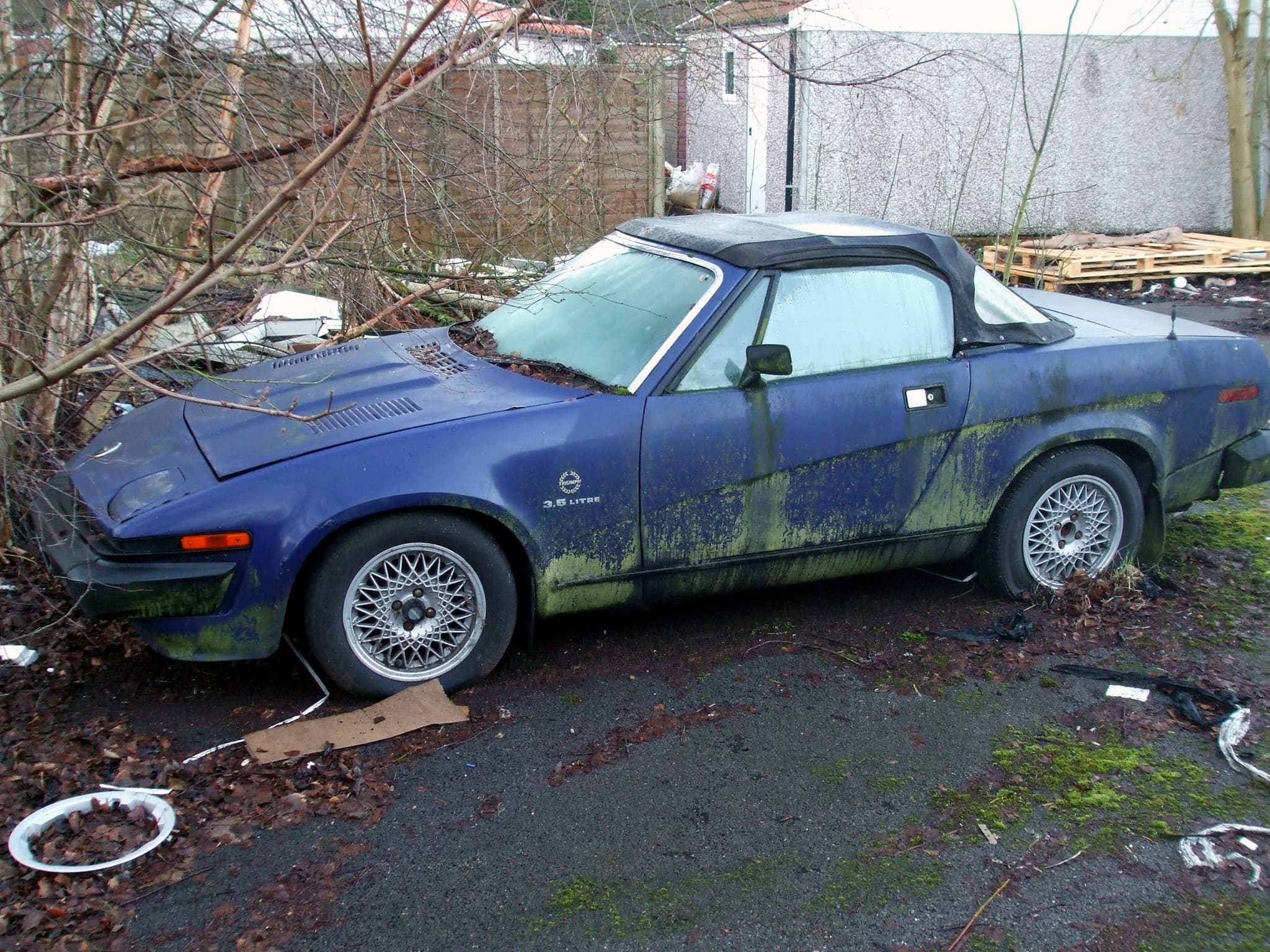
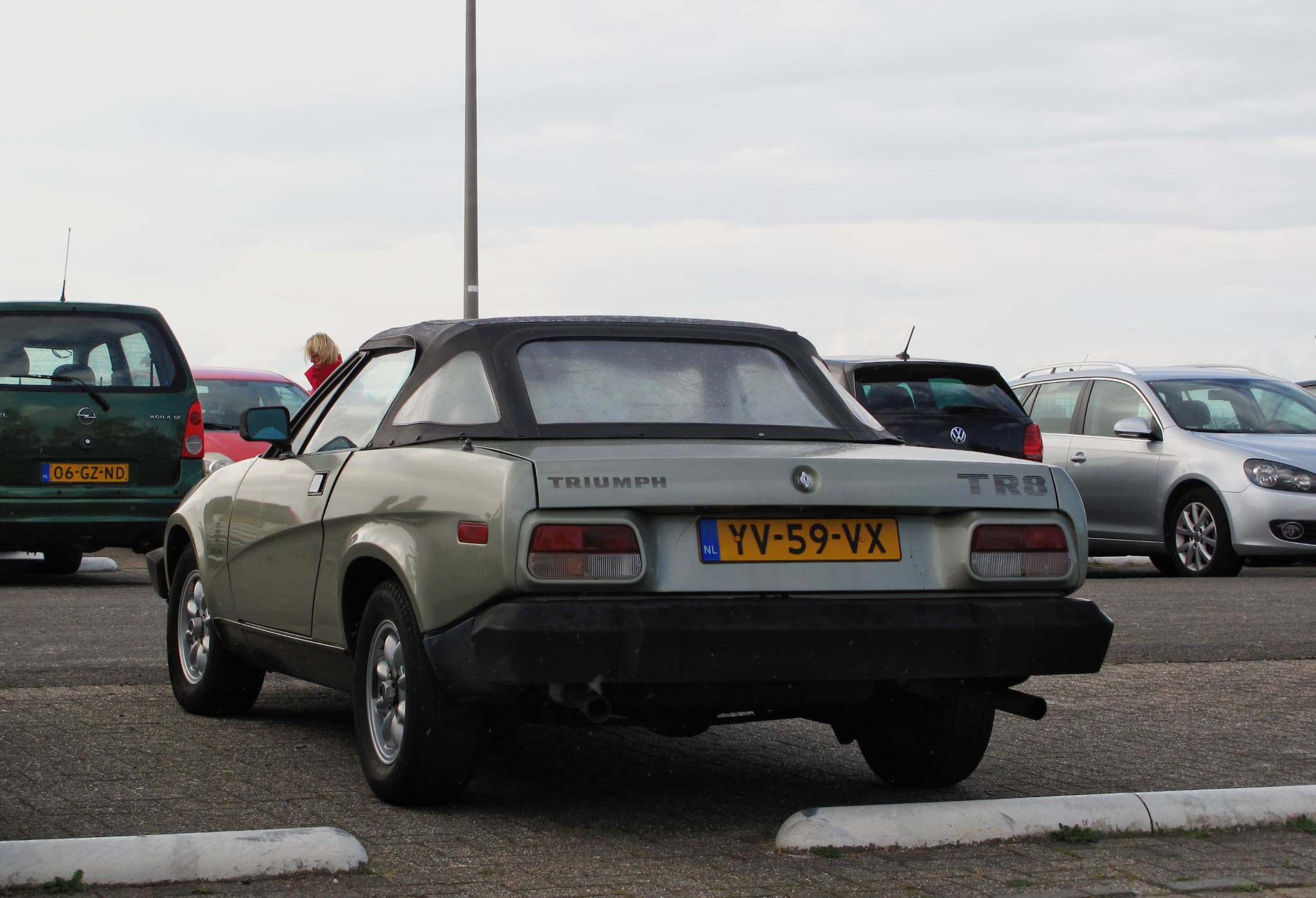
The first question about a TR8 is whether it is one. Many TR7s have been given Rover V8s since they left the factory, in Britain above all, and some carry TR8 badges and papers; only the chassis number, backed by a Heritage Certificate, settles it. After that the TR8 is a TR7 with the Rover SD1's driveline and a well-known engine, and most of what goes wrong with one is known. The sources for this guide are the clubs, triumphtr8.com, the testers of 1980, Mike Cook's drive report of 1996 and the notes of BL's own engineers. On the body they say little beyond a few places to look.source 1source 2source 3source 4
1. Is it a factory TR8?
Start with the chassis number. Nearly every factory TR8 has one of the TR8's own: ACN or TCN for a coupé, TCV for an early convertible, a V in the fifth place of a 14-character number beginning TP, or a 5 in the seventh place of a 17-character number beginning SAT. The exceptions are a few of the British cars, with letters in another order or, in one case, a TR7 number, and Identification explains them all. A Heritage Certificate from the British Motor Museum should match the car. The engine number should begin 10E to 15E, or 20E or 21E on a British car, but triumphtr8.com warns that "A TR8 engine alone ... does not make a TR8 car, it may have come from a scrap car".
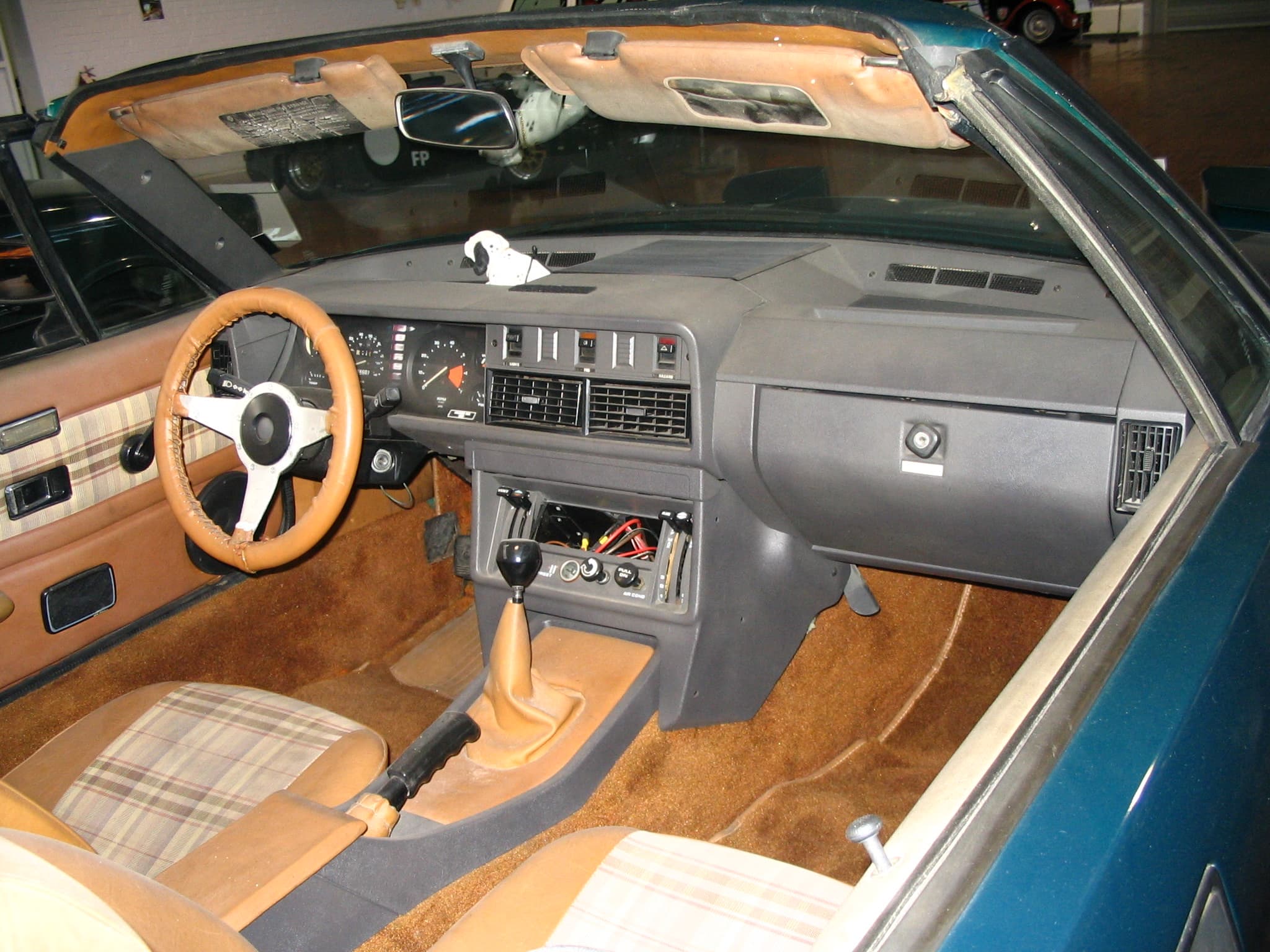
Then look for the signs a conversion seldom has: the power-steering rack, its pipes visible from below, which triumphtr8.com believes fewer than one conversion in 10,000 has; a square inertia switch; a brake servo with a + on its face; the small leather-rimmed wheel on a convertible; and a rev counter red-lined lower than a TR7's. A right-hand-drive "TR8" without a British TR8 chassis number is almost certainly a conversion or a car moved into another shell: the factory built only a pilot run of right-hand-drive cars, described on the right-hand-drive page, and did not convert left-hand-drive cars.
triumphtr8.com describes a good file as a Heritage Certificate, a correct factory chassis number, the original registration document matching the car and its engine, a continuous history of ownership, and any factory documents or photographs of the time. Stories of press cars, development prototypes and coupés built before production need documents of the same kind; the coupé's page explains why so many cannot be proved. triumphtr8.com's advice is short:
Do not buy a TR8 without proven heritage no matter how good it looks!
2. Body and structure
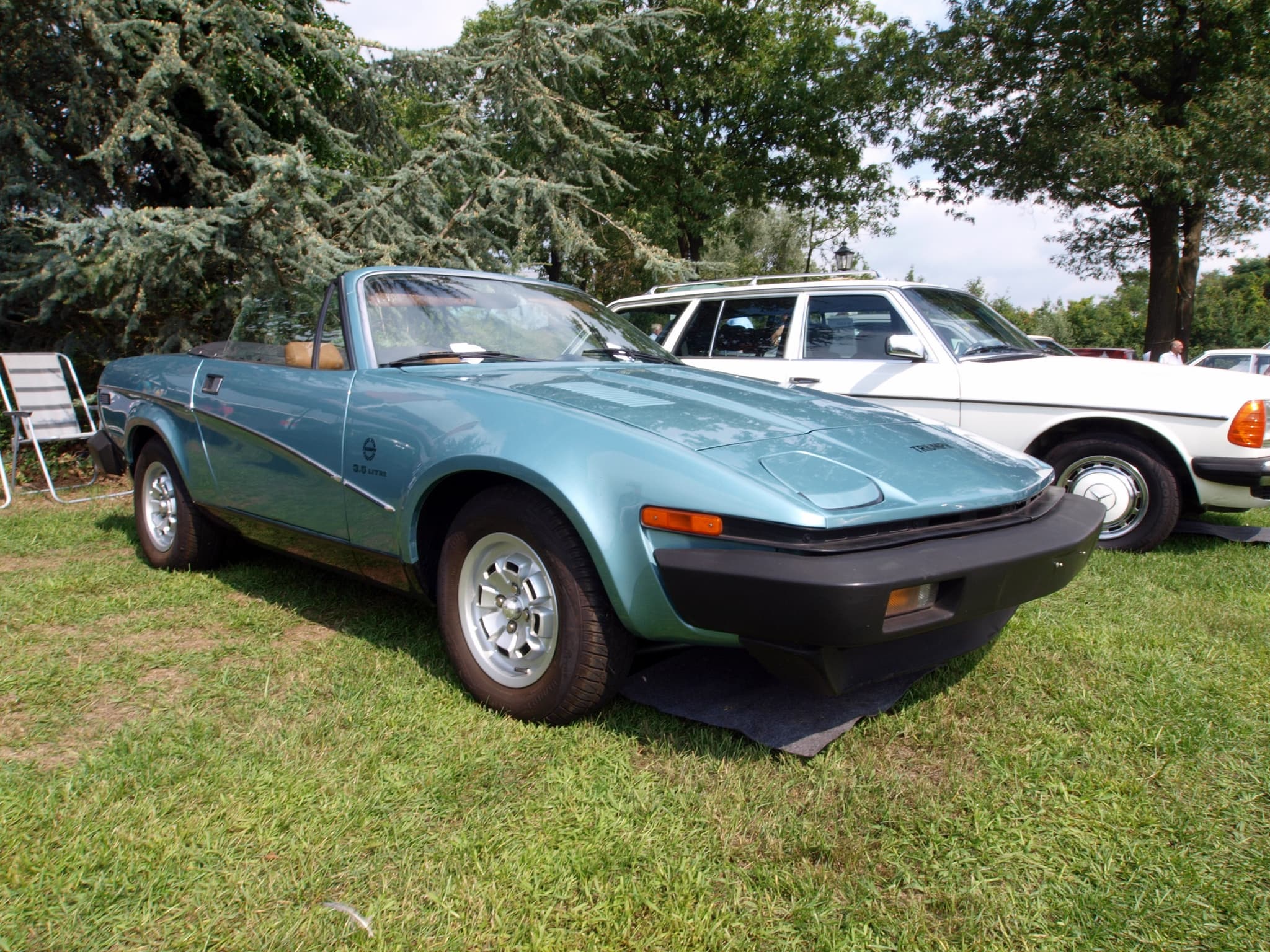
The TR8 has no separate chassis: like the TR7 it is a monocoque, so rust in the structure matters and is a job for body skills. The sources name few places. Cook wrote in 1996 that rust appears "around the headlights, in the upper perimeter of the wheel arches and in the rocker panels", the sills (rocker panels) in British terms. The TR Register's general guide, written for every TR, adds: "Examine the whole length of the tops of the wings, where corrosion from beneath is common", and warns that "Brake fluid and battery acid strip paint and cause corrosion of the metal beneath". Since the TR8's battery lives in the boot (trunk), its floor and the battery frame are worth a look as well.
A convertible's body was stiffened behind the seats, under the rear deck and around the windscreen (windshield) frame, so those are places to check for corrosion and old repairs. On a right-hand-drive car, the bulkhead on the left may show where the pedals and the steering column of a left-hand-drive car once were, the usual sign of a conversion, as triumphtr8.com explains. The paint code on the door plate should match the colour, and the versions page lists the colours by year.source 3source 4source 9source 7source 10
3. Engine and fuel system
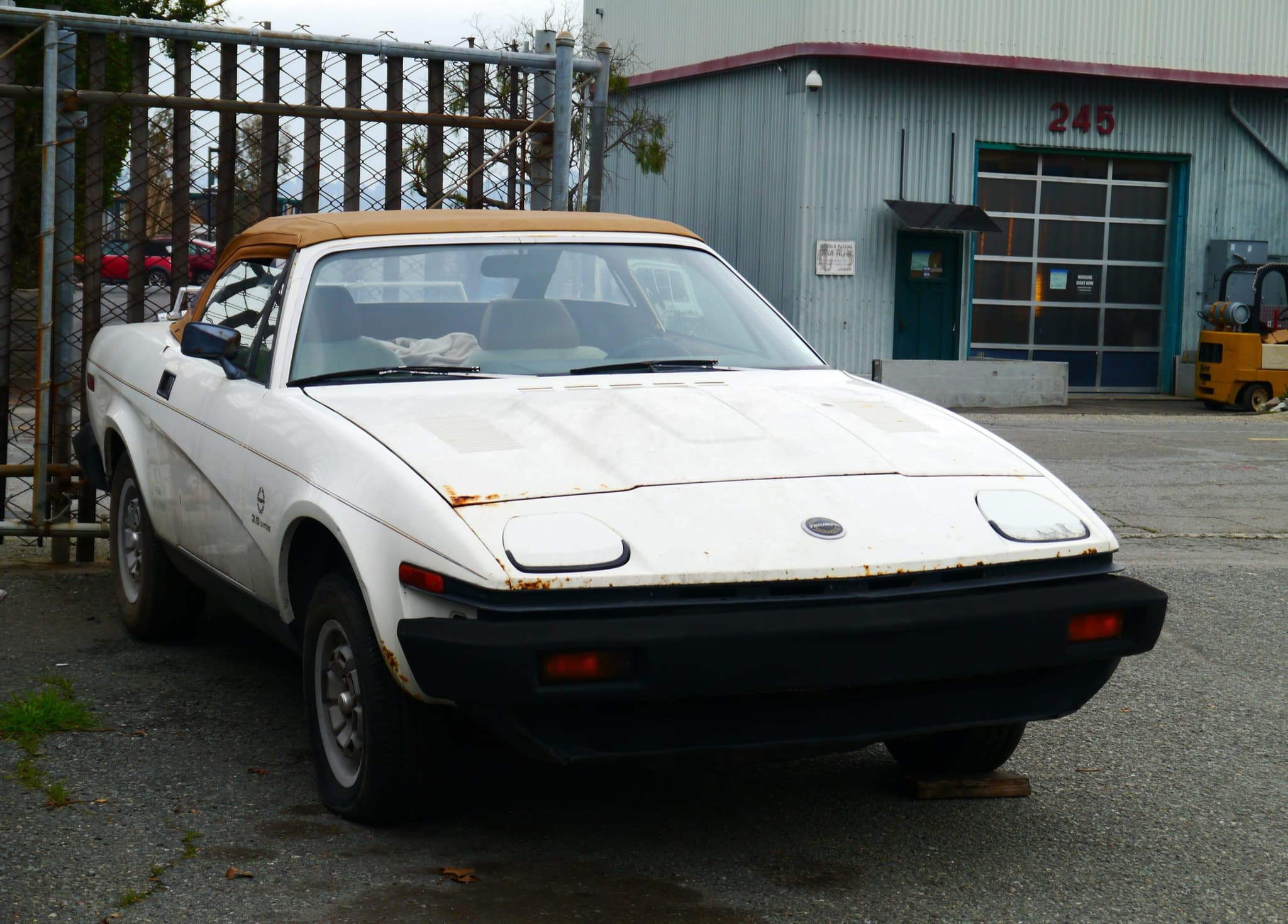
Cook found the Rover V8's mechanical parts easy to get in 1996. A long-term test car, written up by Don Green probably for Motor Trend, ran more than 33,000 km (21,000 miles), and "From sea level to over 9,000-feet elevation, the engine never missed, pinged or complained." Its electrics did less well: the alternator overcharged and boiled the battery, three radios failed in the first 24,000 km (15,000 miles) and a warning light for the catalyst came on at about 7,200 km (4,500 miles).
On a carburettor car, the twin Zenith-Stromberg carburettors have automatic chokes, and triumphtr8.com reports an owner's finding that the teeth on the choke's plastic pivot wear and hold the choke partly on. The airboxes over the carburettors are TR8 parts. On an injected car the Lucas/Bosch L-Jetronic system has a Lucas 4CU control unit, of which the Triumph Wedge Owners Association writes that it has "a pretty bad reputation. Well, OK – a really bad reputation", adding that most failures can be put right in a few minutes. Sensors and valves are harder to find, and triumphtr8.com lists Lucas and Bosch parts that will do instead. Road Test's car of 1980 leaked petrol (gas) at the injector hoses until their clamps were tightened. Some owners have replaced the injection with a Holley carburettor, which is not original.
The ignition has one known weakness:
The big troublemaker is the ignition amplifier. Located inside the distributor, it heats up and shorts out.
Lucas later moved the amplifier to a separate unit on the inner wing, Cook adds. On many TR8s two electric fans cool the engine, switched at 93 °C (199 °F) by the radiator and at 108 °C (226 °F) by the inlet manifold, or by the air conditioning's pressure. The TWOA explains that their relays earth through the starter solenoid, that worn fan bearings draw more current and can overheat the fuse clips until the fuse box melts, and that a temperature gauge that rises and falls in traffic is normal.source 3source 11source 12source 10source 13source 1
4. Gearbox, suspension, steering and brakes
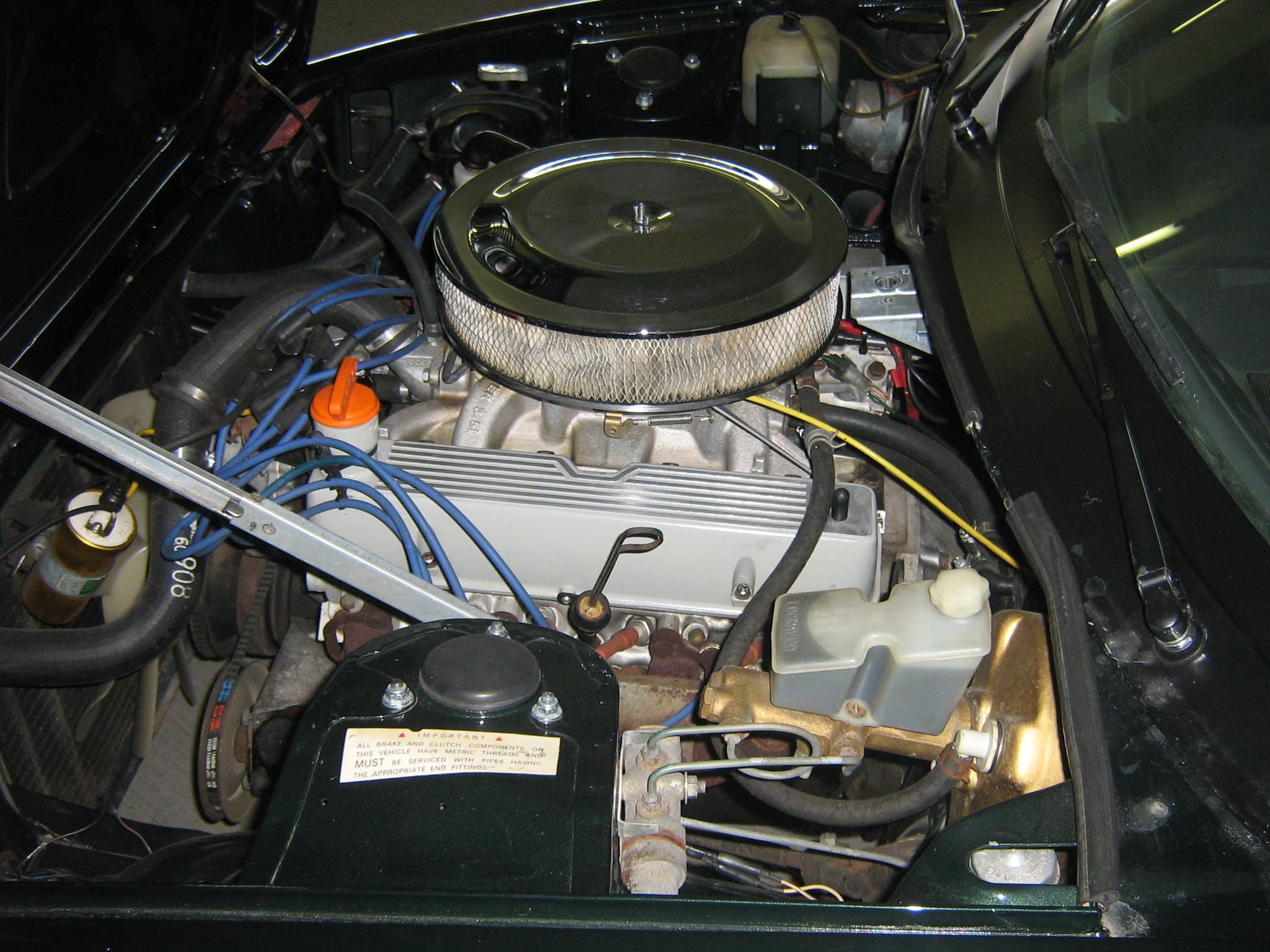
The five-speed gearbox (transmission) is the Rover SD1's, and Autocar noted in 1979 that it "had that familiar notchey change"; Cook found the shift from first to second difficult when cold. The TR Register says the factory changed the gearbox oil it recommended, from hypoid oil to automatic transmission fluid, "to counter balking when the 'box is cold", and warns against towing a five-speed car far with its propeller shaft connected, since the gearbox's oil pump is driven by the engine. The automatic was a three-speed Borg-Warner, and the axle had no limited-slip differential.
The power steering used a General Motors pump and an Adwest rack. A wobble through the steering at 80–97 km/h (50–60 mph) is a common complaint on TR7s and TR8s, and the TR Register lists several cures, from the faces the discs mount on to the geometry, a worn rack and rings to centre the wheels; the long-term test car's shake was cured by balancing the wheels.
BL Motorsport's engineers, working on a TR8 for Britain in 1980, found the standard car under-damped on rebound, with "a large amount of pitch over bumps even on 'smooth' motorways", rear squat, axle tramp and worse:
The standard car suffers badly from nosedive under braking which is uncomfortable, reduces braking stability and causes large variations in headlight range.
The brakes, solid discs at the front and drums at the back, were the testers' main complaint. "In the braking department there are some problems to report," Road & Track wrote: long stops, the front wheels locking and fade on its fast run, for "an overall rating of only fair". Michael Lamm remembered them as "first-rate" on the launch drive of 1980. Changes made since to a car's suspension or brakes are worth knowing about before buying. The wheels have a pitch circle of 95.25 mm (3.75 in), and the TR Register notes that the TR7's alloys have a 25 mm offset.source 14source 3source 15source 11source 16source 17source 18source 9
5. Interior and trim
The cars of the 1980 model year had plaid inserts in their seats, and those of the 1981 model year velour. In 1996 Cook wrote that "Interior trim for 1981s is non-existent, but the 1980 plaid interiors are being produced". The TR8 convertible's small leather-rimmed steering wheel is worth checking too: triumphtr8.com, which also sells parts, says a genuine one has recessed screws and that wheels sold today as original do not. Air conditioning was an option in 1980, and it should work.source 3source 12source 17
6. Models to know
The versions page explains each TR8. A carburettor car is simpler; an injected one had more power by the ratings of the time, which the specifications give, and better economy, 16 mpg (US) in town and 26 on the highway against the carburettor car's 14 and 22, on the EPA figures Road Test printed. The coupés are rarer than the convertibles, and their stories of early build need documents. A genuine British right-hand-drive car is very rare. Personal-export cars, built to the American specification but without catalysts, for leaded fuel, were sold to Americans in Europe, and some were sold in Britain. A Grinnall, which the TR Register lists among the TR derivatives it caters for, is not a factory TR8; TR7 V8 conversions explains.
How many survive is an estimate. triumphtr8.com puts the survivors at about 60% of the North American cars, about 1,700 in the United States and Canada, and about 120 in Britain; the TR Drivers Club's own survey, which is undated, found 120 in Britain, most of the British pilot cars among them.source 13source 7source 19source 1source 2source 12
7. Inspection checklist
Chassis number
A TR8 prefix or VIN, the plates to match, and a Heritage Certificate to confirm it.
Engine, gearbox and axle numbers
A TR8 engine prefix, 15A or 051N on the gearbox and CK on the axle.
Steering side
On a right-hand-drive car, a British TR8 number, and no marks of a moved bulkhead.
Structure
Sills, the tops of the wheel arches and wings, around the headlamps, the battery and master-cylinder areas and the boot floor.
Engine and fuel
Oil pressure and idle; the choke on a carburettor car; the hoses, control unit and air-flow meter on an injected one.
Ignition
Which ignition amplifier is fitted, and where.
Cooling
Both fan speeds, and the state of the fuse block.
Gearbox
The change from first to second when cold.
Brakes
Straight stops, with no fade.
Suspension
Dive, squat and a wobble at 80–97 km/h (50–60 mph).
Trim
The steering wheel and the trim against the car's year.source 1source 6source 10source 7source 3source 4source 15source 17source 16
Sources
Sources are given as plain text; their addresses are on the sources page.
- Primarymade at the time, by the maker or by people who were there
- Referenceserious later work: clubs, specialists, magazines, books
- triumphtr8.com, "TR8's Genuine Factory cars: History & Authentication" and "Is it a genuine TR8?", 6 Jun 2026, conversions badged as TR8s; the signs; "Less than 0.01% conversions"; the Holley carburettor; surviving cars, by region; the numbers and signs. Reference
- Rex Holford, "A Brief History of the TR8", TR Drivers Club, converted TR7s in Britain; the survey of cars in Britain. Reference
- Michael L. Cook, "1981 Triumph TR8: Fast and Last", Special Interest Autos, no. 156, Nov–Dec 1996, pp. 10–17, p. 17, the drive report's faults; p. 17, where it rusts; p. 17, the ignition amplifier; mechanical parts available; p. 17, the shift when cold; p. 14, the axle; p. 10, interior trim in 1996; p. 17. Reference
- TR Register, Buyer's guide pages (group): "Buyer's Guide" (general), "Triumph TR3 Buyers Guide", "Triumph TR3A Buyers Guide", the general buyer's guide; the tops of the wings; brake fluid and battery acid; the monocoque. Reference
- Paul Towle and Rex Holford (update) and Mark Elbers (update), "TR7 & TR8 Identification & Production Data Explained", TR Drivers Club, 1987, updated (© 2016), the TR8 prefixes and VIN places. Reference
- British Motor Museum (BMIHT), "Heritage Certificates", service description. Primary
- triumphtr8.com, Pages (group): "FHC V8's 'TR8 Pre Production'", "TR8s with Creative Histories" and its linked case page, "Triumph TR8 RHD vs LHD: Factory Conversion Myths", "Buying a TR8", "TR8 Test, Development. EXP cars", "Buying a TR8": a good file; "Do not buy a TR8 without proven heritage"; engine numbers alone; "Did the factory convert USA LHD TR8s to RHD?": the bulkhead; "pre-production" histories; the bulkhead of a converted car. Reference
- triumphtr8.com, "Right hand drive TR8 Home Market UK" and "TR8 RHD Production Story", modified 23 May 2026, the British cars' numbers. Reference
- Thos L. Bryant, "New from Britain: Triumph TR7 Convertible & TR8", Road & Track (reprinted by the TR Drivers Club), 1979, the convertible's stiffening; the GM Saginaw pump and Adwest rack. Primary
- Triumph Wedge Owners Association, Document pages (group): "TR8", "Memos", "Brochures", TSB indexes, "Deciphering the Wedge", "Component Serial Numbers", "TR8 Cooling Fan System", "TR8 ECU", "Deciphering the Wedge": paint and trim codes on the door plate; "TR8 ECU"; "TR8 Cooling Fan System"; Component Serial Numbers; "TR8 ECU"; "TR8 Cooling Fan System". Reference
- Don Green, "Triumph TR8: a 20,000-mile durability run", Motor Trend (probably: not printed on the scans), 1980 or 1981, pp. 1, 5: the engine; the electrics; the shake cured by balancing. Primary
- triumphtr8.com, Pages (group): "TR8 VIN/CHASSIS", "TR8 Paint Codes", "TR8 trim codes", "TR8 Documents", "TR8 Adverts", "TR8 Clubs", "TR8 Efi – Injection system and sensors", "WL9 Camshaft", "Leyland Special Tuning", "TR8 FIA RAC", "TR8 Auto Choke", "TR8 Badges where do they go?", parts pages, posts "RHD TR8 UK SPEC" and "Round Britain Reliability Run 2023", TR8 Auto Choke; carburettor airboxes; TR8 Efi; the steering wheel, PKC1295; the TR Register's description of the derivatives it caters for, as quoted. Reference
- Walt Woron, "1980 Triumph TR8 Convertible: RT's Selection for 'Best New Sports Car of 1980'", Road Test (US), Jul 1980, pp. 16, 83–86, p. 83, the leaking injector hoses; data box p. 86: EPA figures. Primary
- John Miles, "Miles Behind the Wheel: America's TR8", Autocar, 1979 (May, according to triumphtr8.com), p. 2, the gearbox. Primary
- Malcolm Paris (compiler), "Triumph TR7 / TR7 V8 and TR8 Buyers Guide", TR Register, FAQ: gearbox oil, towing, wheel wobble, wheels; FAQ. Reference
- R. Hurdwell (BL Motorsport, Abingdon), "TR8 Modifications" (memo, 4 pp.), BL Motorsport (via the Triumph Wedge Owners Association), 16 Dec 1980, pp. 1–2, the standard car's handling; the handling. Primary
- Road & Track, "Triumph TR8: Good news from the other side" (road test), Jun 1980, pp. 76–79, p. 78, the brakes and the front end; the air conditioning option; p. 78, the brakes. Primary
- Michael Lamm, "1st Drive in the Triumph TR8", British Car, Feb–Mar 1999, pp. 46–48, p. 47, the brakes at the launch. Reference
- triumphtr8.com, "European Spec LHD TR8's", 27 Dec 2025, personal-export cars. Reference